Showing posts with label seed starting. Show all posts

Sunday, January 29, 2017

When Can I Start Seeds for My Spring Garden?

The answer to “when can I start seeds for my spring garden” depends a lot on how much of a gambler you are. If you have seeds, seed-starting materials, and space with lighting galore, then anytime is probably a good time.

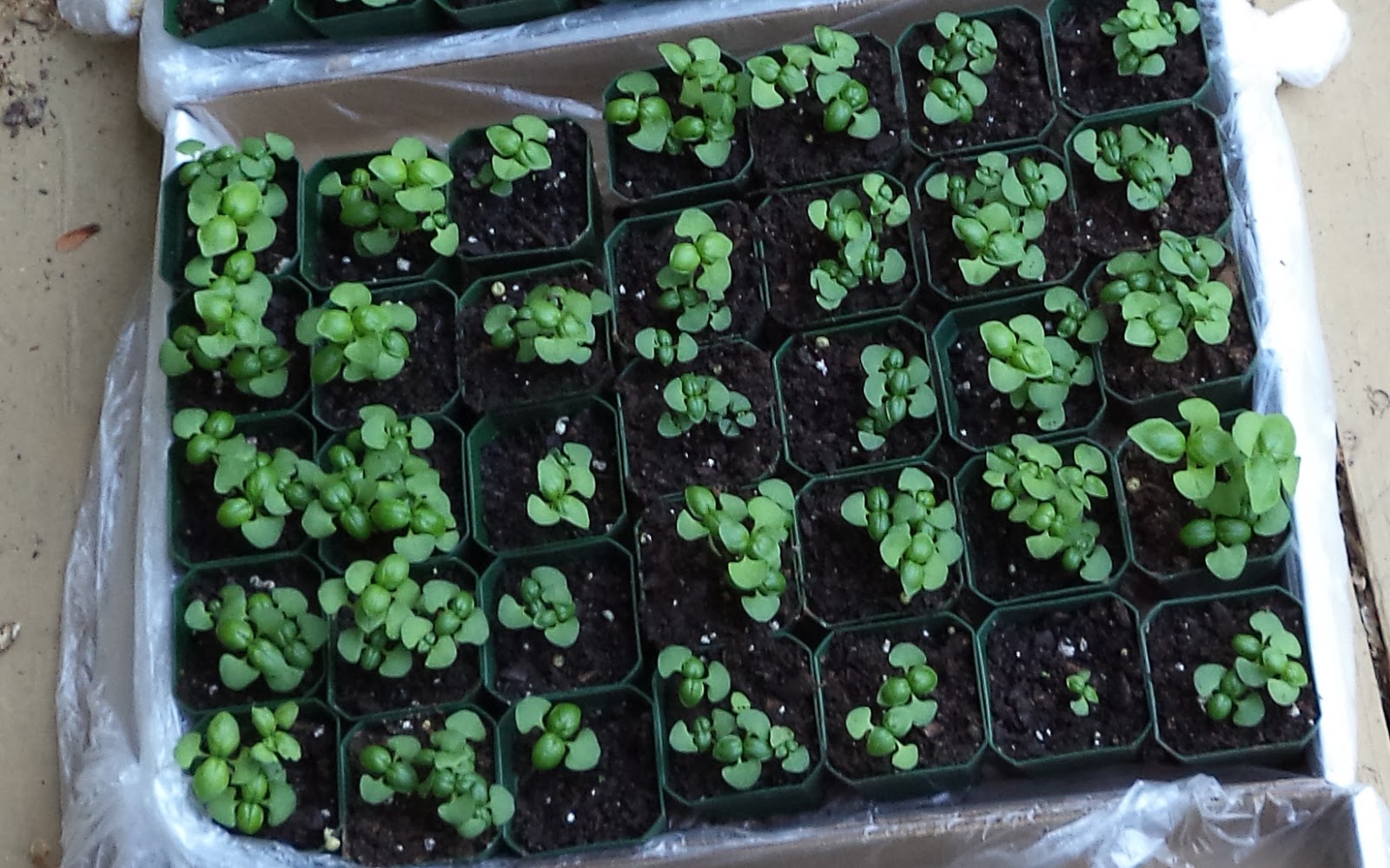
Basil seedling started at end of March, 2016, for sharing in May. PHOTO/Amygwh
If, like me, you have limited space, lighting, and materials, following a more conservative schedule may be a better choice.

For spring veggies and early flowers, my first planting usually begins in mid-to late February. That is when I plant seeds for English peas (and sugar-snaps), spinach, dill, and early flowers like larkspur outdoors in the garden. That is also usually when I set some seed potatoes in a single layer in a lighted space  indoors (sunny window can work) so they begin to sprout for mid-March planting.

The problem with planting earlier is that some seeds, peas especially, will rot in the ground if they are too cold and damp for too long. When they do come up, though, they can survive some very cold weather. So can little spinach seedlings. The dill and larkspur won’t come up until later, but they do better when planted early outdoors. That is just their way.

Seeds for other spring crops may come up in a stretch of warmish weather if planted outside very early, but if we get a return to actual winter, with temperatures dropping below 20 degrees F for more than a couple of hours, the little seedlings are not likely to survive. Spinach seedlings can take the cold, and it is possible that kale and collards can, too, but lettuces are sometimes less happy with such very cold nights, and new carrot seedlings might not make it, either.

Since the weather can still turn very cold in February, I keep an eye on the forecasts before planting even the most cold-hardy of veggies outside.

For most of my spring veggies, I wait until the first of March to start seeds indoors. That list usually includes lettuces, parsley, and beets. When these little plants are big enough, I move them outside for a few hours each day to help them adjust to life out-of-doors before transplanting them into the garden. By the end of March, they should be ready for that move.

Seeds for peppers often are slow to come up, and I tend to start some peppers, for summer, in the first or second week of March, too. Carrots can be planted outside at around the same time.

Tomatoes are a lot speedier to develop than peppers, so I wait an extra week or two before starting any of those.

Monday, January 16, 2017

Choosing Varieties for the Small Veggie Garden

Choosing what to grow in a small veggie plot is a fun part of gardening. Right now, seed companies are sending out catalogs, and garden centers are setting up their seed displays. Pictures in the catalogs and on the seed packets all look so good!
Seeds from Irish Eyes for a small garden.  PHOTO/Amygwh

With so many wonderful seed options, how can we make choices that will be good for our own gardens?

Besides choosing crops that our families will actually enjoy eating, it helps to find out which varieties do well in our region, and it also helps to choose varieties that have been developed to stay smaller than the full-size versions.

Smaller crops can be easier to tend, since they stay “in bounds”, and a lot of the smaller varieties have a shorter time to maturity. ‘Little Gem’ Romaine lettuce is just 6 inches tall (super cute!) and should be ready to harvest as a full head in just 46 days. ‘Tom Thumb’ Butterhead lettuce is another small variety, taking 60-65 days to reach full size, and it has done very well in my own garden.

Clues to mature size are often right in the name of the variety. Look for words like spacemaster, bush, gem, little, baby, and jewel.

Of course, some veggies are naturally space-saving, all on their own. Carrots, radishes, and beets, for example, which only need a square of space 3-to-5 inches across per plant to grow well, can all be good choices for gardeners working with smaller spaces.

Wednesday, January 27, 2016

Is It Spring Yet?

Walking to the neighborhood coffee shop on our "snow day".
November and December were so warm that they hardly counted as "winter months" this year, but we finally had a little snow to cap off three weeks of cold weather, and that really is just about enough winter. Are other gardeners as itchy for spring as I am this year?

Right before the coldest nights, we pulled most of the remaining beets and winter radishes and about half the remaining carrots, since the tops that stick up out of the ground can get mushy from exposure to very cold air. I haven't checked under the row-cover yet, but I am hopeful that the last couple of cabbages are not too damaged.

The spaces created by pulling up those crops have me thinking about what to plant next. I know that the "last frost date" is a long way off, but some more cool-season crops can go into the garden sooner.

This weekend, I finally will sit down with my stash of seeds and the pile of 2016 seed catalogs and begin work on my seed-starting and planting schedule for the year. That activity has been put off this long because always, when I start thinking about it, I want to get started right away (even when the schedule I create has a first-seeds-starting date in late February!).

Luckily, even though (in theory) it is too soon to start seeds of most crops, I will be leading a seed-starting workshop in February, and to get ready for that I can start a small number of plants as part of the demonstration portion of that workshop. Those first few plants will be from my own stash of seeds. For the seed-starting workshop, though, Park Seed has Very Kindly Donated some seeds for participants to plant.

I had asked for seeds of the Parks Whopper tomato, since that variety is very hardy in our area, and it is a very tasty tomato that not enough people know about or grow. In addition to the packets of Parks Whopper, they also sent three packets of peppers (California Wonder, bell pepper, organic seed, and Karma hybrid sweet pepper) and a couple of additional tomato varieties (Little Napoli, a great variety for container growing, and Early Girl hybrid that is a UGA recommended variety for our area). It will be great to be able to send participants home with planted-seeds of varieties that are known to do well in our area!


Wednesday, March 18, 2015

Indoor Seedlings for the Summer Garden

I started seeds for the summer garden in a flat indoors, back in early February. Many of the seeds germinated and have grown, but it always is amazing to me that each kind of seed has its own schedule.
Mostly tomato plants, started in February.

Monday, February 9, 2015

Almost Seed-Starting Time

Well, it's almost time to start seeds of tomatoes, peppers, and eggplants here in my area, so of course I've jumped the gun. The weather this past weekend was glorious, and I spent part of it out on the back deck setting up the first flat of those long-time-to-maturity vegetables. I added some tomatillo seeds, too.

I wrote a guest-post about seed-starting for UGA's Community Gardening blog that was posted last week, and I included two links near the end for some UGA publications about seed starting. Any beginners at seed-starting might want to check out those links, because the explanations (and illustrations!) they contain are more complete than I could fit into a blog post.

The usual garden vegetable seeds are fairly easy to germinate, partly because they are for annual plants; the seeds have simple needs for temperature, light, and water that are easy to fulfill by mimicking springtime indoors. Seeds for shrubs and other perennial plants often have additional requirements for aging, for cold-storage (mimicking winter!), and for having traveled through an animal's guts, and this winter I have been working with seeds for jujube bushes that are in this category of persnickety seeds.
Bag with 4 jujube seeds in sphagnum, stapled to instructions.

My friend Eddie brought me four jujube fruits last fall, and I have been following instructions I found online through SF Gate to prepare those seeds for spring. After eating the fruits (tasted like apples!), I soaked the seeds for about an hour, then scrubbed the remaining stuck-on fruit off the seeds. Then, I placed the seeds in a paper bag, in the dark, to dry and "finish ripening" for a couple of months. Then, I put the seeds in a ziploc bag with some damp sphagnum moss, and put that whole shebang into the fridge.

The plastic bag is stapled to the brown bag the seeds "ripened" in with a note that says the seeds can come out of the fridge anytime after February 10. That's this week! There are several more steps ahead to get those seeds ready to germinate, but I am hopeful that the process will work. Wish me luck?

Sunday, January 11, 2015

Thinking About Seeds

Last Thursday I spoke about Planning for Seed Saving for the local Master Gardener group, then the next day I gave an open-to-the-public "Lunch & Learn" presentation about Vermicompost, and on Monday, I will be talking about Organic Gardening for the Marietta Garden Club.

This may all sound disconnected and crazy (and maybe like I'm some kind of amazing sucker for saying "yes" to three requests for different topics so close together); however, in my mind, this all ties together in a way that makes total sense.

As I plan my garden for the year, in working out when to plant which varieties to allow for my little efforts at seed-saving, having the information fresh in my mind from giving the talk is a huge help. I will be starting seeds in February for some crops, and my vermicompost will come in handy at that time.

There are two main streams of thought when it comes to starting seeds. One is that you should use a completely sterile starting mix to minimize the risk of damping off as the seedlings develop; the other is that you should use a starting mix with so many beneficial microorganisms that they out-compete the damping off fungus. Also, I've run across a few studies that indicate that mixing as much as 20% by volume of vermicompost with the usual seed-starting medium actually enhances seed germination and seedling vigor.

I'm running with that second group for most of my seed starting this year (although I will still have some of those Jiffy Pellet seed-starting sets in my office, for demonstration purposes). The vermicompost that I have harvested from my little worm bin will come in handy as I begin to set up my flats for spring seeds.

Supporting beneficial microorganisms within the soil community is key to organic gardening. When I transplant those seedlings that got their start in an environment that is rich in microbial life, my organically-managed garden can only benefit.

I'm looking forward to the last of these three getting-ready-for-gardening talks!

As a bonus, along the way, I've had the joy of hanging out with many other gardeners, three work-days in a row, exchanging ideas as we all gear up for spring.

Monday, September 15, 2014

Seeds are for Sharing

A gardening friend stopped by the office not too long ago, bringing with him a plastic "sandwich bag" full of pawpaw seeds. I've washed the big, brown seeds, stashed them in a little plastic tub to keep them damp, and they now are in a little fridge at work. If anyone wants a few, please feel welcome to call and/or stop by to pick some up (UGA Extension, Cobb County, 770-528-4070). I'd like for them to not go to waste.

I already have pawpaws growing in my yard, and there are several pots of seedling pawpaws on my back deck, from a drop-off of a dozen seeds earlier this year, and most of those also need good homes. To make fruit, cross-pollination is required, so two or more plants/seeds will be needed for each planting.

For me, pawpaws are a connection to home, because when I was growing up, my great grandfather had pawpaws growing in his yard in Claremore, Oklahoma. For anyone who is less familiar with these native fruits, Kentucky State U. has a helpful page about pawpaws.

I've said it before, but one of the best parts of my current job is that it places me in the hub of a wheel of garden generosity. Gardeners drop off extra seeds, sometimes even plants, and I get to move them along to other gardeners who can use them. It's a great place to be!


Monday, August 11, 2014

Not Fall Yet, But Getting There

This weekend I made more progress on switching over to "the fall garden." Some of the summer plants are still doing really well, some are just now reaching their peak of production (peppers, okra), and some are nearly done.
Rutgers tomato plant, still green and productive.      PHOTO/Amy W.

Based on the percentage of browned leaves, I'd say that the Better Boy tomato plant is going to keel over soon, but the Rutgers plant is still covered up in green leaves and plenty of fruit.

This weekend, I pulled out one of the smaller-fruited tomato plants that looked pretty bad, and that should help the airflow around the Rutgers and Better Boy, hopefully helping to keep them alive and productive a little longer.

The Cherokee Purple is definitely done, the Pink Brandywine still has a few fruits, and the Amish tomato plant is somewhere in between. It has several green fruits that are nearing ripeness along with some smaller, newer fruits, but the foliage is yellowing and droopy. I think it has fusarium wilt, but I haven't sliced into a stem yet to check.

Fruits of a passionflower vine. This vine has at least 10 so far. PHOTO/Amy W.
Among my other experiments for the summer is a passionflower vine. The flowers are beautiful (I'll try to get a good picture up, soon), and I'm hoping that the fruits have enough pulp inside that I can make a little juice or jam.

Another crop that I haven't really mentioned yet this year is the greasy beans. Six slender vines (they are pole beans) are climbing up a little trellis, and they have been making small numbers of beans, but the production has been steady. When I bring in a handful, I pull off the strings then toss them up into a hanging basket to dry for leather britches. If I had lots of them, I'd do the traditional hanging-up-on-a-line-to-dry thing, but I don't.

Flat of seeds for cool-season crops.      PHOTO/Amy W.
I've started some more plants for the fall garden, too. While waiting for more of the summer crops to finish, it can help to have some of the cool-weather crops already started, for transplanting to the garden when the space is available.

Just behind the flat in the photo to the left is a box with some cabbage seedlings in it that I started a few weeks ago in peat pellets. Those were bumped up into a couple of old "6-packs" last week, and I'll be setting those plants out into the garden in the next week or so.
Butternut squash nearing maturity.          PHOTO/Amy W.

The husks on the popcorn have been turning brown and dry, and as I've noticed that change I've brought them in. If I leave them outside too long in damp weather, they tend to mold (it's happened before), so bringing them in on time can be important.

I finally brought in some dried Provider Bush Beans that I had left on the plants to mature, to replenish my seed supply for planting next year.

The wrinkled, tan pods were definitely ready to be pulled! The beans have been removed from the pods, and I've set them out to dry in a wide, flat basket.

I have some Joanie Beans growing in the yard, too. These bush beans from my friend Becky are part of her family history, and I plan to save seeds from those, too.

When the weather returns to being a little bit more dry (we've had a lot of cloudy and cool, with light rains mixed in), I'll start bringing in the butternut squash that began to turn to the mature tan color a few weeks ago.

This is a busy time in the garden, but so rewarding. I hope that all the other gardeners out there are enjoying this time in the gardening year as much as I am!

Tuesday, July 15, 2014

Thinking Forward to Fall

Has everyone else already started seeds for fall crops? Here in Cobb County, it's time! The cool-weather crops we usually set out as transplants - broccoli, cabbage, cauliflower, Brussels sprouts - mostly have a long enough time-to-maturity that they are planted out to the garden in the second half of August, which means the seedlings need to be started now.

Exceptions would be for faster-maturing varieties, like Early Snowball cauliflower that is such a speed-crop (just 50 days!) that gardeners have an extra 3 or 4 weeks to get that one started.

In my garden, the space for most of those Brassica-family crops (aka: cabbage family; cole crops, Cruciferae) is still taken up by the April-planted tomatoes, but the space where I'm planning to plant carrots this year has some cucumber vines that are looking pretty ragged. I may pull those up this weekend and strew some buckwheat seeds in that space for now, to help get the soil in shape for the next crop.

When the buckwheat starts to flower (it happens fast!), that would get turned back under to add organic matter to the soil. In the meantime, the plants would have helped hold onto nutrients and encouraged some good microbial activity underground.

Monday, March 17, 2014

Seedling and Potato Progress

My indoor seedlings are making good progress:
Pepper seedlings need to be bumped up to separate pots.

Tomato seedlings that moved into these "6-packs" two weeks ago are almost ready for new, larger pots.
I didn't work on these seedlings over the weekend (they should be fine for a few more days as they are), because I focused my gardening energy on getting the seed potatoes planted outside.

The crop rotation schedule that I designed has a flaw in that, some years, the tomato-family plants end up with less space than I would prefer, because not all of my garden beds are the same size. This year, the tomato/potato/pepper/eggplant space is alarmingly tight.

To make sure there would be enough room for everything, I hacked up some more lawn out at the ends of two beds for potato-space. After peeling off the turf part, I dumped on an inch or so of compost and dug that a couple of inches down into the awful red clay. Then I layered on more compost, laid out the seed potatoes on top, then spread another couple of inches of compost over the seed potatoes.

After the seed potatoes have sent greenery up above the surface, I'll pile on some more compost, then finish the top off with some old hay. As the plants grow, I'll water them a few times with a little fish emulsion solution for an extra phosphorus kick. At least, that's the current plan.

While poking around online to decide whether my plan could work, I found a really great article in Mother Earth News about growing potatoes organically. The article "How to Grow Organic Potatoes" is an interview with Jim Gerritsen, a professional grower in Maine, that hits all aspects of growing, and it even includes information for gardeners here in the South. The article goes on for quite a few pages, but, for anyone planning to grow organic potatoes, it's worth taking the time to read.


Thursday, February 13, 2014

It's Magical Outside

The title words for this post are the words I woke up to this morning. It was insanely early in the morning, but Joe was right. Snow was everywhere, covering the ice that had coated everything yesterday. Magical. We don't get to see the landscape so transformed very often here in Kennesaw.
After Joe took our old coonhound out for a brief slide around in the yard (her back legs aren't very stable these days), we took our younger dog for a long, pre-dawn walk. Snowflakes were still falling, and no one else was out.

We've spent a couple of days at home since Georgia declared a state of emergency over the winter weather, and I've been contemplating the coming spring for much of that time. I've plotted the crop rotations for the year, put in my last seed order, and hovered over a flat of seeds so recently planted that only the lettuces are visible above ground. The tomatoes should appear in a few days, but the peppers and eggplants could be much slower.

I've also done a bit of small-farm research for a new farmer who came to the office on Tuesday, and I've been reading more about community gardens, permaculture, and agro-ecology. If it sounds like I've had a great couple of days, well, it's all true!

In the news, there was talk of widespread power outages, so we have kept the woodstove going. Yesterday we had a pot of crowder peas (harvested and shelled out late last summer) on that stove most of the day; today we have vegetable soup on the woodstove, and I've made bread. Power at our house has stayed on, but a transformer "blew" up the street, leaving some of our neighbors without electricity for a while. Luckily, repairs already seem to have been completed.

For me, it's been a pleasant  couple of days, complete with garden thinking-and-reading, phone calls from concerned relatives (in Oklahoma, Texas, and Louisiana), text updates from local friends, cozy moments with my pet bunnies, magical moments with Joe, and comfort-foods hot off the woodstove. I hope that other gardeners have also found ways to enjoy the break from their usual routine!

Monday, February 10, 2014

DIY Potting Mixes and Seed Starting

Many of my gardening friends have complained in the past few years about the quality of the standard potting mixes that are available in most garden-stores. One friend in particular, who starts a thousand or more plants each spring for school gardens, community gardens, and a Plant-a-Row-for-the-Hungry garden, has lost many hundreds of plants as a result of "burning" from a bad potting mix.

Last year, my friend used a bag of a professional potting mix, Faford brand, that she bought from a greenhouse supply store up in Ballground. The mix did not include fertilizer, so she was able to regulate the amount of nutrients that were available to the plants and to avoid burning her seedlings, which are so very sensitive to the salts in conventional fertilizers.

In my own shopping for potting mixes, I've also noticed the variable quality issue, even in seed starting mixes that are no-fertilizer-added products. Some are just very finely textured peat, and some are the finely textured peat plus perlite and possibly something else. For seed starting, the finely-textured aspect plays an important role in keeping very small seeds from washing too deeply into the soil to push their seed-leaves up into the light.

This year, I've started some seeds in Jiffy Pellets, but yesterday I also mixed up a batch of my own mix, filled a flat, and planted some seeds. The recipe I used is based on one from ATTRA, from its publication "Potting mixes for certified organic production." If you go the webpage to view (or download!) the publication, the recipes are way down toward the end, in appendix 3.

My mix is equal parts compost and peat moss and a quarter-part of perlite. This mix filled a 5-gallon bucket about 2/3 full. To these main components, I added a couple of Tablespoons of an organic fertilizer mix. If my compost had been "heavier," I would have used more perlite. Also, if I'd had vermiculite in my supply area rather than perlite, I might have used that, instead. Basically, I used what I had on hand.

For those who might not want to sort through the numerous mixes in the ATTRA publication, Organic Gardening offers a pared-down list that was gleaned from the ATTRA set.

Thursday, July 18, 2013

Time to Start Thinking about Cool Weather Crops

Last night, I pulled a box of Jiffy Pellets from my garden-supplies shelf and a few seed packets from their storage boxes, and I started some broccoli, cabbage, and cauliflower plants. Am I a total loon to be starting this early? It turns out that the answer is "no." Now is definitely the time to start some of the fall crops that typically are set into the garden as transplants.

Seeds that I hope to plant directly into the garden in mid-August (just four weeks from now!) include carrots, beets, and winter radishes. The lettuces, spinach, and other greens that would normally be planted outside at about the same time can be started in flats, to be transplanted out later. I usually don't start the fall greens in trays (or peat-pellets), but this year I might need to. 

My garden got off to a late start this year; I kept waiting for warm weather, and it was very slow in coming! That means that the whole garden is running behind. As a result, it will be more of a challenge than usual to get the fall crops planted, making the use of lots of transplants much more necessary. Transplants can go into the ground later than seeds, giving the summer crops more time to finish their work.

The good news for gardeners who don't have the right packets of seed on hand is that, in the past several years, local stores have begun keeping seeds in stock right through the summer. A decade or so ago, by mid-July there no longer were any seeds in stock on shelves in any of the usual places. We all had to plan ahead much more carefully!

For people who are new to Fall gardening or who have questions or want to know more, I'll be giving talks on Planning the Fall Vegetable Garden in the next couple of weeks. One will be at the Cobb County Extension office (Tuesday, July 23, 6:30 p.m.) and one at Chestnut Ridge Christian Church (Saturday, August 3, 10:30 a.m.). Both are free and open to anyone who'd like to attend.


Saturday, March 16, 2013

Bumping Up the Seedlings, and Other Goings On

We are having some pretty glorious spring weather this weekend in North Georgia, so Joe and I have spent a lot of today outside. We did our usual couple of hours of work on the farm (out on Dallas Highway) this morning, ran a few errands and ate at a Chinese place, but the rest of our day has been out of doors at home. This is some of what I worked on:
I had a lot of veggie-babies that needed to be moved to larger pots. There are still a few left for tomorrow, but I am very happy with the progress of my plants so far. Some plants had been started a couple of weeks earlier than usual, because I wanted to be able to show people at a seed-starting class what the seedlings would look like, and as a result I have some pretty big plants. Usually, I have more smaller plants now, and no big ones. The trio of tomatoes that got bumped up to the one-gallon containers is an especial surprise to me.

I know people who ALWAYS have big plants to set out in April, but that is not typically the case for me. I can only hope that I am able to keep those plants happy for the next few weeks! Most of them won't be planted out to the yard until mid-April. That leaves a lot of "indoor time" left.

Veggies aren't the only plants in my yard. I have been enjoying this pot of pansies all winter long, and soon it will have more color for me to enjoy.


When I was putting in the pansies, I put in a few bulbs first. I had been wondering when I would see them, and I finally have an answer! A couple of hyacinth are coming up now.

The under-planted bulbs in the pot of pansies are a great addition to my yard. If I hadn't been giving talks on container plants last fall, I wouldn't have been motivated enough to make it happen, but I am Very Happy that I took the time to make this happen.

It will be great to see more flowers.


The leaves and flower stalks are on their way. Right now, the flower stalk is just a little nub, but it will be stretching up above the pansies in the next several days.


Something else we worked on today was beginning to clear some space for some Tree Removal Guys to come and take down a loblolly pine tree. Joe cut down a couple of small trees, and I helped trim and stack the branches so that they would be easy for the city workers to take away to be made into mulch.

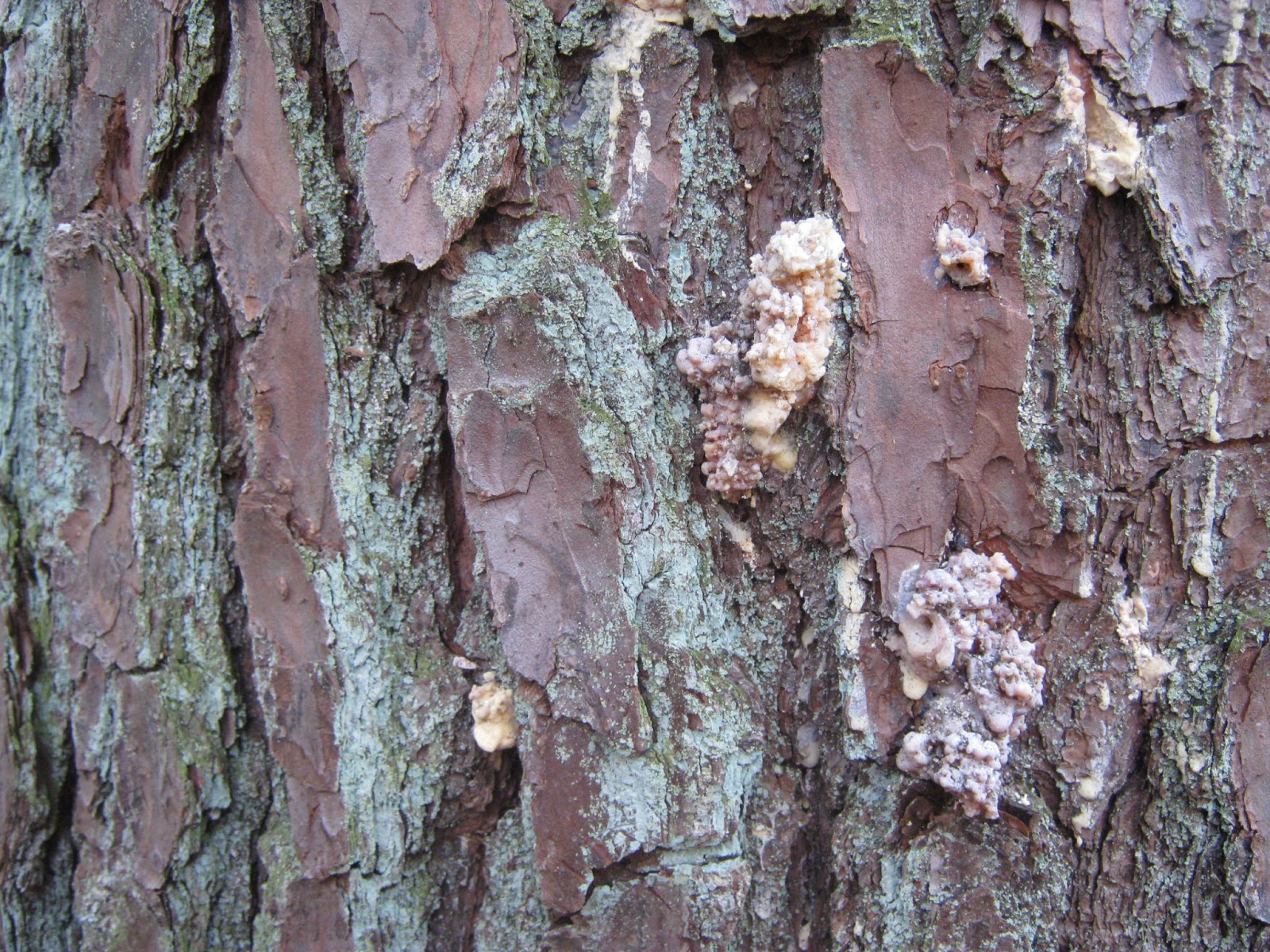
The Loblolly pine is coming down because it is infested with black turpentine beetles. The tree had had an earlier infestation, but this year there are  enough visible pitch tubes on the lower portion of the tree-trunk that I am getting a little concerned about the tree's viability.

Turpentine beetles don't kill a tree with the same speed or certainty as Southern Pine Beetles, but if there are enough beetles the tree can be girdled.

The picture to the right shows the abundance of the pitch tubes. The photo below shows some up close:


And this last photo shows the height of the tree. The guy who came to give us a cost-estimate for the removal of the tree said that this is a big tree. He guessed that it is at least 110 feet high, maybe 115 or more.

Needless to say, the tree's removal won't be cheap, but my front garden will, at least, be getting a little more sun this summer.

We have a little more work to do to get ready for the big tree removal, but we also have some weeding and planting to do in the veggie garden.

The potatoes are in, as are most of the peas, but there is still another patch of peas to go in. That will be part of tomorrow's work.

Hope everyone elses's weekend is going well!

Monday, February 11, 2013

The Seeds of Spring are Planted in the Dining Room

In the best of all possible worlds, I would have a cute little heated greenhouse that I could start seeds in for my early spring/summer vegetable crops; instead, I have a big glass door and some fluorescent lights in the dining room. The good news is my current set-up, though somewhat limited in terms of space, works just fine.

Mid-Feb. is a little early for starting most of my seeds, but I am scheduled to give a presentation on seed starting on Feb. 19, and I want to have little plants up and growing for "show & tell."  By then, it will no longer be absurdly early, and the people who sign up and start seeds with me at the talk will be all set for some successful growing.

My seedlings that are coming up now, on the other hand, are at risk of spending too long indoors and getting too lanky as a result. I might need to go find another light or two to help brighten my plant-babies' lives and keep them stockier.

There will be some planting outdoors soon, too. I'll be planting onion sets as soon as I can find them, and even though it's a bit early still for peas, we are getting close. I usually judge the readiness of the soil by when the trout lilies bloom in my yard. I'm not seeing flowers yet, but the speckled leaves are coming up by the back fence.

Here in Cobb County, we have until about mid-March to get seed potatoes in the ground, but I have already dumped a load of compost on the spot where those will go this year. In the past, when I've had a chance to visit my Mom in Oklahoma in late winter, I've bought my seed potatoes at the little grocery store down the street from her house. They typically cost about 50-69 cents a pound, and they work just fine.

Since I haven't been able to visit recently, Mom went to get some for me and put them in the mail. She picked up some Red Pontiac, White Cobbler (my favorite), and Kennebec.When those arrive, I'll cut them into egg-sized chunks, each with a couple of eyes, and set them in a warm place to get them growing before they are planted out. The warm place will be (you guessed it!) the dining room.


Wednesday, February 6, 2013

System of (Garden) Intensification

Most of the world's farms are very small, on the scale of a few acres or less, and they are mostly in what we think of as less developed nations, so changes in methods/practices that increase their crop yields have the potential to do a lot of good in the world. These are the farmers and countries for which enhanced farming success can make a real dent in local hunger and poverty levels.

An article linked over at Resilience.org (used to be Energy Bulletin), titled "How Millions of Farmers are Advancing Agriculture for Themselves," tells about a farming method that has improved crop yields for a lot of these farmers.Yields per hectare have shot through the roof for these people when they use what is called the System of Rice Intensification (SRI). The system has been adapted to additional crops, but it started with rice.

According to the article, part of the advances made are from using huge amounts of organic material (mostly composted), part is from using a wider plant spacing, and part is from using healthy transplants at the right stage of growth. 

The different use of the word "intensive" was a little surprising for me. What I have come to know of as Intensive Gardens are usually planted with quite close plant spacings. However, one organization that I especially associate with intensive gardening, the Ecology Action group in California, recommends that each gardener find out for him or herself what the optimum spacing is for his or her own garden. The group has published at least one small booklet that teaches gardeners how to experiment to find the optimum plant-spacing for their own gardens. The teaching series that the group publishes is really, very useful for gardeners who want to improve their yields.

In my own garden, I have gone back to wider plant spacings than are generally recommended in the  better-known intensive methods, because it has seemed that my garden is more productive when the plants have a little more room. This may be because my garden isn't in full sun, causing shading to be a bigger factor than in other gardens, or it could have something to do with the humidity and heat in the Southeastern U.S.  There is no good way for me to know the exact "why" without running a bigger experiment than my yard has room for.

The "greater success when more compost is used" part of SRI  is the same across many styles/methods of gardening, especially for those used in areas where the soil is mostly clay, or sand, or rock. (Exceptions to the "needs more organic matter" rule can probably be found in places like the Eastern Shore of Virginia, where the topsoil is richly black, crumbly, and deep.) The article didn't say, though, where all that organic matter comes from for the SRI farmers.

The part of the SRI system that ends up being the biggest roadblock for some farmers is the transplanting part. Rice and other cereals that "tiller" are more likely to put out more tillers and to become more robust when the seedlings are set out at an earlier stage than is generally practiced. The SRI seedlings, being smaller and younger, require more care in the planting, and getting the spacing right also takes a bit more attention on the part of the planters. In other words, this whole step is very labor intensive.

However, even in non-grain gardens, the health of transplants (purchased or home-grown), their stage of growth, and the care with which they are set in the garden can be overlooked as factors in a garden's success. For my own grown-from-seed plants, I put a lot of effort into keeping them growing well, repotting when it seems they might be slowing down, and paying attention to the soil moisture and the lighting. When I've done a good job, I am rewarded with a productive garden!

I am less good at hardening-off the babies as it gets closer to time to plant them in the yard, but I do make an effort. When I don't phase them into the sunlight slowly enough, the little plants tell everyone who happens to glance their way about my lack of care by wilting.

For most of the SRI farmers, getting it right is crucial. And there are more and more people in this country for whom access to good food is getting tighter. Gardening, and getting it right, is looking like a pretty important endeavor.


Thursday, December 27, 2012

Indoor Blueberry Babies

It's taken awhile, but a couple of the blueberry seeds that I planted in November have sprouted. If all goes well, several more will come up in the next few weeks. However, if this is all I get, I can't really complain.

The seeds were from berries that had been in the freezer, from the rabbiteye blueberry bushes in the front yard. When the house was smashed by the tree this past summer, the berries probably experienced more freeze/thaw cycles than were good for the seeds' eventual ability to germinate.

The baby plants are super-tiny, with stems thinner than sewing thread and cotyledons sized to match. For the rest of the winter, these will grow fairly slowly, and I will be keeping them under flourescent lights, repotting as necessary, until the weather moderates enough that they can go outside. Then, as many as there are will go into a "nursery bed" outside until they are big enough to pot up for sharing. One of the great things about gardening is that I get to see everyday miracles like the one of  such tiny plants growing to become full-sized bushes!

To separate the seeds from the blueberry pulp, I followed instructions from University of Maine's Cooperative Extension, which has published a very useful "how to" called "Growing Blueberries from Seed." 

I started these seeds as part of my "eHow" adventure. This is the video about how to plant the seeds:


Since the winter garden is slowing down, and the weather has turned decidedly colder, I am very happy to have some new plants to tend indoors.

I hope that everyone else's winter-garden adventures are going well!

Tuesday, December 11, 2012

Adventures in eHow

Several weeks ago I spent part of one day working with a video guy who produced educational films for Demand Media Studios, which had a deal to post them in eHow. In about five hours we made 17 little films about various gardening topics.

He got paid, but I didn’t, even though I worked hard, too. However, it was a very interesting experience. I had wondered about the whole eHow thing, and now I know a bit more about how it works.

The topics had to be chosen from a list provided by Demand Media Studios, and the wording wasn’t allowed to vary. For example, if the topic had the phrase “blueberry tree” in it, those exact words had to be in the introduction to the video. At first, this seemed a little weird to me, but it turns out to be a way to reach the audience where it is in terms of gardening knowledge, and the audience is full of people who might not yet know that blueberries grow on bushes rather than trees.

The experience also helped me understand why some eHow videos seem incomplete. We were given a pretty tight time limit for each video. There was only enough time for the "bare bones" of each topic, which meant that I had to leave out some potentially useful information. Also, because the filmmaker/videographer needed to have at least 15 little films lined up to make his trip out to my garden at all profitable, and because we had to choose from a somewhat eclectic list of topics, we were not quite “in season” for all the topics being filmed.

The good news is that the list included enough topics for which I had actual, real-life experience that we were able to pull the project together. Here is one example from the set:


When I started this blog, one main motivation was to share information - that might actually be helpful - about growing food in gardens here in the South. The Atlanta area in particular is packed with people who are not originally from here. I’m a perfect example: grew up in Oklahoma, but previously gardened in other states, including the Eastern Shore of Virginia, where growing food was super easy.

It would be pretty safe to bet that I am not the only person who has found gardening here a bit more of a challenge than it was in my previous yard.

I don’t know yet whether making eHow videos is at all helpful to gardeners who are new either to this area or to gardening itself, so I don't know whether I'll be making more of these, but I am happy to have been able to participate in this little project.

(Note: The videos are on an assortment of topics, including raspberries, blueberries, fertilizers, transplanting, plant propagation, and soil preparation; hence, the long list of "Labels" attached to this blog post.)


Sunday, February 26, 2012

Summer Begins in February

Even though it's been a warm winter, it hasn't been exactly summer-like, and even though I've been enjoying the vegetables of winter, I have been hankering after some fresh summertime veggies. The good and the bad news is that a lot of summertime veggies need to get their start long before summer. Tomatoes, peppers, and eggplants, in particular, have a long time-to-maturity, which means their seeds need to be planted indoors now, or even a week or two ago.

I had thought about starting some seeds earlier, but last week I was in Oklahoma with my Mom, who was recovering from hip-replacement surgery. I didn't want to leave just-germinated seedlings for my family to tend, since they would have plenty of other things to manage while I was away, so I waited.

Happily, not only is Mom doing very well, but yesterday afternoon I filled most of a tray of those "Jiffy" peat-pellets with seeds. Part of the tray is yet-to-be-filled, because the seeds I've ordered aren't here yet, but most of the tomato and pepper seeds for this year are in the tray, as are the eggplant, parsley, marjoram, basil, and a pink Salvia. It feels great to have made a start on the summer garden!

I also planted (in the ground) some seed-potatoes yesterday. There is a short row of Red Pontiac and a short row of White Cobbler. At the end of the potato area I planted some spinach seeds (Tyee), and along one side of the trellis I planted a row of lettuces (Capitan). The seeds were leftovers from previous years, but I found the seed potatoes at Mom's neighborhood grocery store in Choctaw, Oklahoma. The seed potatoes, which were 59 cents a pound, were in a bin in the produce department, along with several varieties of onion sets.

The weather isn't spectacularly warm, but the high temperature yesterday, and forecast again for today, is the mid-50s. That's plenty warm for doing some serious work in the yard. I expect to spend much of this afternoon outside. Hope everyone else is having a beautiful weekend!