Showing posts with label small garden. Show all posts

Tuesday, June 13, 2017

Small Home Gardens I've Seen Recently

I have been traveling around Italy this past month, and in spite of all the great museums, artwork, and historic structures that are pretty much everywhere I look, the little gardening efforts of regular folks are what draws my attention the most.
Looking WAY down on a small veggie garden in Chianciano.
When we have been zooming along in buses, I see a lot of larger gardens that are absolutely amazing, but I have not had a good way to take pictures. In smaller towns, though, especially in non-tourist areas, little food gardens are fairly easy to spot.

Hilltop towns like Chianciano are steep-sided, so I have had to lean out over walls to take pictures of the gardens (Joe makes sure that I am leaning safely!).  They almost all include a few grape vines and an olive tree or two!

Other residents don't have any bare ground for growing anything. One way they make up for that lack is by hanging planters on the walls and then filling them with flowers and herbs. I've seen a few hanging containers with strawberries trailing out of them.

Another hilltop town called Sinalunga has a suburban area on flatter ground outside the walls of the city, and Joe & I saw MANY little food gardens there. It was interesting to see that even small gardens here are planted in rows, while many small gardens in Georgia are planted in blocks, using intensive spacing.

I do not yet know whether the large number of gardens represents tradition or if it reflects on the local tax structure. One Italian guy we met, who had lived in Louisiana for many years, said that taxes here are nearly 60%. Even though that high taxation covers social programs like healthcare, that tax rate could encourage food-growing, since food you grow is not taxed. Every vegetable and bit of olive oil and wine that is produced at home could be seen as un-taxable income. That particular motivation is referred to by some gardeners I've known as "sticking it to the man".

Regardless of the reasons for their existence, all those little food gardens make me smile. Hope that all the gardens back home are doing well, in spite of the super-abundant rainfall of the past several weeks!


Monday, February 6, 2017

Now You See Them, Now You Don't: Perennials in the Garden

Do you remember when you first figured out that some plants look great for only part of the year before looking as though they had died, but then they popped back up the very next year looking like nothing unusual had happened?
Daffodils in my yard.   PHOTO/Amygwh

When I see daffodils, which do exactly that magic act, I remember talking (maybe 15 years ago) with a young guy about his new home and its great yard. He was very concerned that he had already killed some of his beautiful flowers.

We eventually figured out that his flowers were daffodils.  The guy just had not yet learned that some flowers (like daffodils) come up early, bloom for a couple of weeks, and then begin to die back for the year.

It was a moment of revelation! I do not remember the exact moment when I learned about the "hibernation stage" of bulbs and the plants known as "herbaceous perennials", but I certainly remember when that guy learned. We talked some more about the strange ways of plants, and he was relieved to know that he had not killed his beautiful flowers.

Plenty of other flowers follow a similar life pattern. All of the spring bulbs (tulip, hyacinth, crocus, for example), Bee Balm, Anise Hyssop, Phlox, Bleeding Hearts, Trout Lily, Blood Root, and many more beautiful flowering plants do the same disappearing act for at least part of the year.

However, not many of our commonly grown food plants are herbaceous perennials, disappearing for awhile before returning. Asparagus is one. Horseradish is another. Fennel does that same magic act, too. A few weeks ago, all you could see of my fennel plants was some bare, brown sticks poking out of the ground. Right now, in the garden, the fennel is starting to show some dense feathery growth around the base of those sticks. They are reborn! Magic.


Sunday, January 29, 2017

When Can I Start Seeds for My Spring Garden?

The answer to “when can I start seeds for my spring garden” depends a lot on how much of a gambler you are. If you have seeds, seed-starting materials, and space with lighting galore, then anytime is probably a good time.

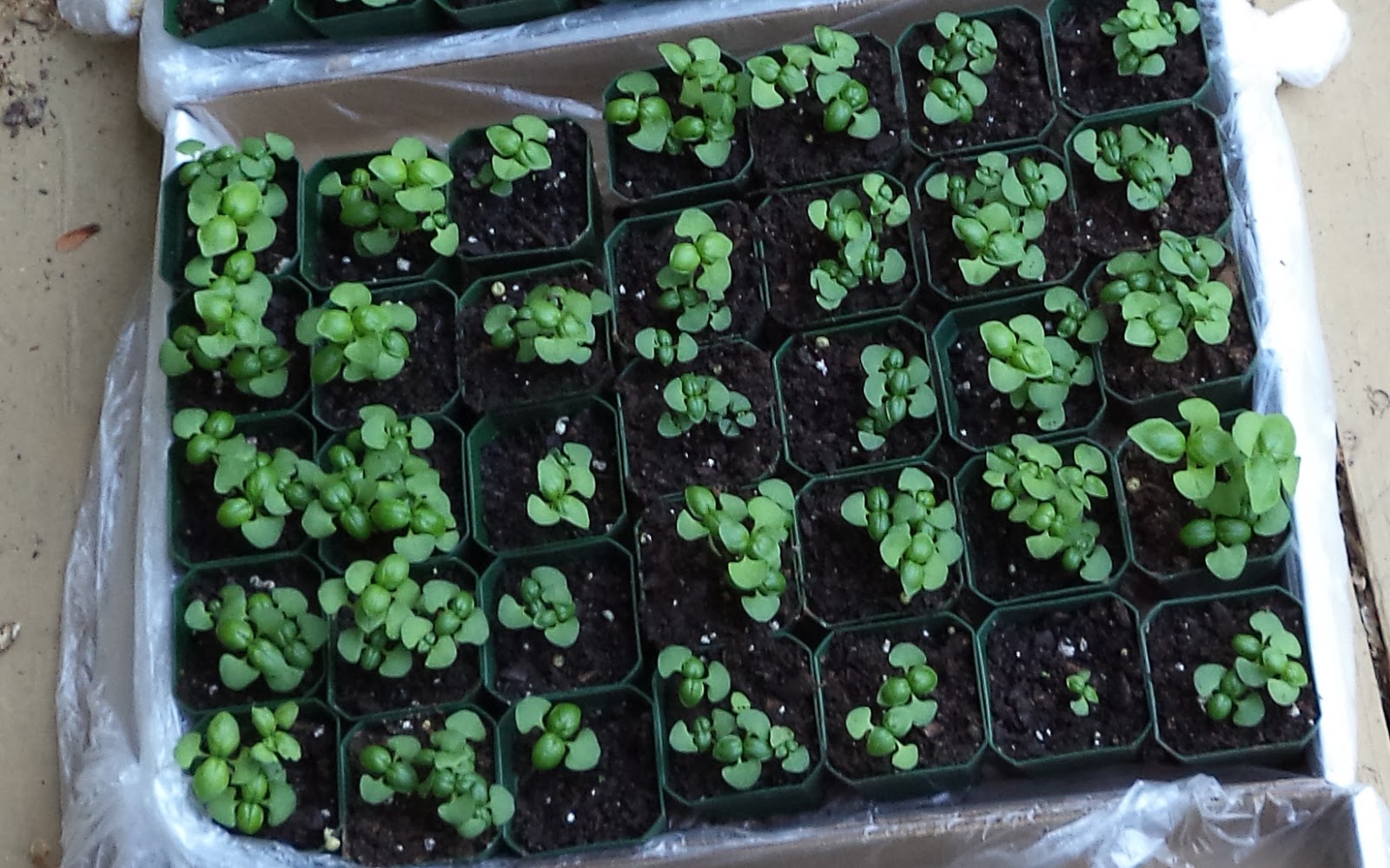
Basil seedling started at end of March, 2016, for sharing in May. PHOTO/Amygwh
If, like me, you have limited space, lighting, and materials, following a more conservative schedule may be a better choice.

For spring veggies and early flowers, my first planting usually begins in mid-to late February. That is when I plant seeds for English peas (and sugar-snaps), spinach, dill, and early flowers like larkspur outdoors in the garden. That is also usually when I set some seed potatoes in a single layer in a lighted space  indoors (sunny window can work) so they begin to sprout for mid-March planting.

The problem with planting earlier is that some seeds, peas especially, will rot in the ground if they are too cold and damp for too long. When they do come up, though, they can survive some very cold weather. So can little spinach seedlings. The dill and larkspur won’t come up until later, but they do better when planted early outdoors. That is just their way.

Seeds for other spring crops may come up in a stretch of warmish weather if planted outside very early, but if we get a return to actual winter, with temperatures dropping below 20 degrees F for more than a couple of hours, the little seedlings are not likely to survive. Spinach seedlings can take the cold, and it is possible that kale and collards can, too, but lettuces are sometimes less happy with such very cold nights, and new carrot seedlings might not make it, either.

Since the weather can still turn very cold in February, I keep an eye on the forecasts before planting even the most cold-hardy of veggies outside.

For most of my spring veggies, I wait until the first of March to start seeds indoors. That list usually includes lettuces, parsley, and beets. When these little plants are big enough, I move them outside for a few hours each day to help them adjust to life out-of-doors before transplanting them into the garden. By the end of March, they should be ready for that move.

Seeds for peppers often are slow to come up, and I tend to start some peppers, for summer, in the first or second week of March, too. Carrots can be planted outside at around the same time.

Tomatoes are a lot speedier to develop than peppers, so I wait an extra week or two before starting any of those.

Monday, January 16, 2017

Choosing Varieties for the Small Veggie Garden

Choosing what to grow in a small veggie plot is a fun part of gardening. Right now, seed companies are sending out catalogs, and garden centers are setting up their seed displays. Pictures in the catalogs and on the seed packets all look so good!
Seeds from Irish Eyes for a small garden.  PHOTO/Amygwh

With so many wonderful seed options, how can we make choices that will be good for our own gardens?

Besides choosing crops that our families will actually enjoy eating, it helps to find out which varieties do well in our region, and it also helps to choose varieties that have been developed to stay smaller than the full-size versions.

Smaller crops can be easier to tend, since they stay “in bounds”, and a lot of the smaller varieties have a shorter time to maturity. ‘Little Gem’ Romaine lettuce is just 6 inches tall (super cute!) and should be ready to harvest as a full head in just 46 days. ‘Tom Thumb’ Butterhead lettuce is another small variety, taking 60-65 days to reach full size, and it has done very well in my own garden.

Clues to mature size are often right in the name of the variety. Look for words like spacemaster, bush, gem, little, baby, and jewel.

Of course, some veggies are naturally space-saving, all on their own. Carrots, radishes, and beets, for example, which only need a square of space 3-to-5 inches across per plant to grow well, can all be good choices for gardeners working with smaller spaces.