Showing posts with label organic gardening. Show all posts

Monday, May 22, 2017

Summertime Adventure

Anyone who has been reading this blog for very long may have been wondering when I would get around to telling what I've planted in my garden this year. Usually, I spend most of January and February all in a tizzy over seed catalogs, trying to decide what new crops will go into the garden in spring.

This year, I tried not to look too closely at the seed catalogs that arrived in my mailbox, because I knew that I would be away from home for much of the summer. Reading them could have caused a bit of mental conflict!

My food-garden right now has a lot of herbs in it, the big strawberry patch, garlic and shallots planted in early winter, a few lettuces (unless a neighbor has eaten them)
Plenty of strawberries in the yard this year!

View from where I am writing today.

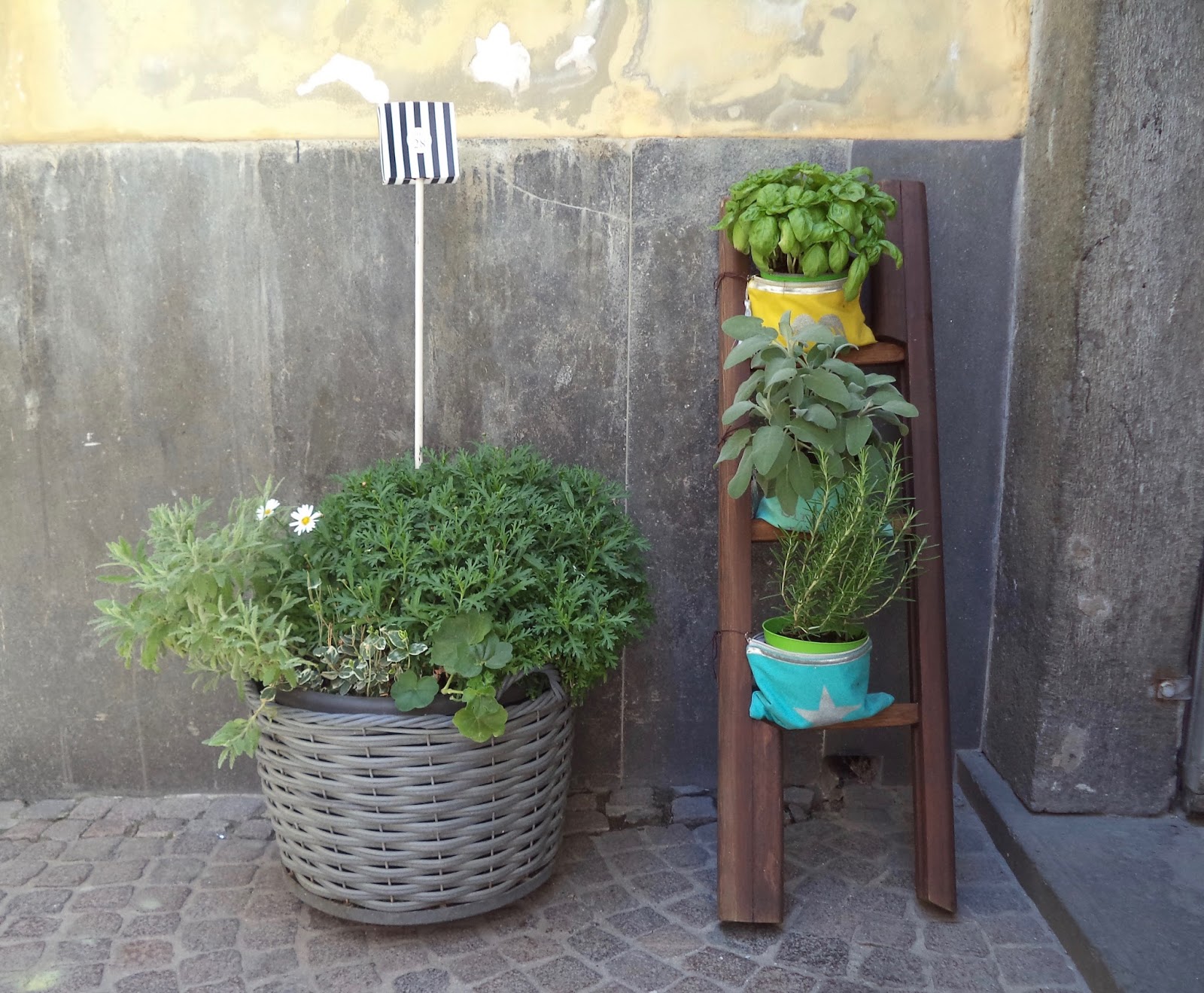
Container gardens: Not many veggies, mostly herbs and flowers.

Wonderful place not far outside of town!
and flowers for the local pollinators. There are no summer crops in the garden because I am in Italy!

I left an assortment of college students in charge of the house and the lawn-mowing, and the only plants they are tending are two houseplants and the big container/planter by the front door.

When I get home, I can start thinking about the fall garden (and a whole lot of weeding, I expect). It has been weird, though, to not plant any vegetables. I have grown vegetables in my yard in NW Georgia every summer since 1991.

I am looking forward, while I am in Italy, to learning more about gardening here. On a walk outside the city walls this weekend I found a large garden center, and even though my Italian language skills are sketchy and the English language skills of the people at the garden center are only a little better, we managed to communicate well enough.

The garden center features many annual and perennial flowers, but I also saw trays of vegetable transplants and pots of herbs. I will be going back again in the next few weeks to see/learn more.

Already I have seen that anyone with even as little open ground as a 5x10 foot patch is growing at least an olive tree. Larger spaces often include other fruits. I've seen quite a few cherry trees (sweet cherries, that don't do well in the humid Southeastern US), a few other fruit trees, and outside the walls of the town and in parks, there are umbrella pines that produce big pine nuts that are good to eat. It is great to find that so many people grow at least a little food!

The center of the hilltop town I am in, Montepulciano, is very paved, which accounts for the large number of container gardens, but farther down the sloped sides of the town there is more unpaved space, and some homes that have little yards. One yard that I saw on Friday includes a chicken coop, some fencing around a planting of tomatoes, a couple of olive trees, and a peach or apricot.

On another walk, I found the local biodynamic farm, Fattoria San Martino. I am hoping to make an official visit soon, complete with lunch reservation, and I will be reporting back on what I learn there.

Hope that all your gardens are doing well! If garden problems crop up, though, please feel welcome to ask about them through the comments link of this blog.

-Amy


Sunday, February 26, 2017

Georgia Organics Conference, Part 2

Really, the very best parts of attending something like the Georgia Organics conference are meeting new people and hearing those peoples' thoughts about food and our food system. This is probably an example of what is called "confirmation bias," where we seek out and bend information in ways that support our own world view, but I did leave the conference with an upbeat feeling about local food production in Georgia.
Cover of our conference schedule. It is actually green. PHOTO/amygwh

After my friend Electa and I arrived on Saturday morning, we signed in, then went through the breakfast line and looked for a place at a table.

We wound our way through the big breakfast area to a table that had only one woman and her young son seated there. Over breakfast we learned that they both had completed a growers bootcamp put on by Habesha Atlanta (but held in Augusta), and they were starting their own small food-growing operation.

While we ate and talked, more people who had participated in the same bootcamp, and who had begun working to grow some good food, joined us. This was a GREAT way to start the conference!

Throughout the day, we met and spoke with other people who had established small (1/2 acre or less) orchards and veggie farms and small chicken production operations in urban and suburban areas throughout Georgia.

Then one speaker (could have been GA's Ag commissioner Gary Black; my notes are sketchy here), in talking about Georgia's food system, listed big farms, medium farms, small farms, and home gardens as all contributing to our food system.

Home gardens! It was so great to hear these recognized as an important element of food production in the state.

My dream, of course, is that everyone finds a way to grow at least a little food. Our individual production may be small, but it all adds together.

Sunday, February 19, 2017

Georgia Organics Conference, Part 1

Yesterday, early in the morning, I drove across Atlanta with my friend Electa to the Georgia Organics Conference, which was being held at a convention center near the airport. We had a fun day, met people who grow and love good food, and learned lots.
Cover of the Conference Schedule. In real life, it is green.

Eight different topics were presented in each time slot during the day, and they pretty much all looked interesting and potentially useful. However, picking the topic to see for our first session easy, because my friend Terri Carter was presenting about Food History in the South.

I was especially interested in the maps of trade routes she showed us and in the role of failing economies in influencing which foods were adopted into the "mainstream" diet. 

At other presentations during the day, I wrote down ideas/thoughts that could help home gardeners. This is a not-so-short list:
  • Sustainability starts with the seed. Choose varieties that are disease resistant and that don't need pesticides.
  • In a small farm or garden, "diversification hedges your bets." Grow more than one variety of each vegetable.
  • In a small space, 'Georgia Rattlesnake' watermelon, which produces Very Large Fruits, might not be the best choice, even though its flavor is spectacular. The plant covers a lot of ground to make those enormous fruits.'Ice Box' and 'Moon and Stars' have a much lower brix reading than 'Georgia Rattlesnake'. You might want to try different smaller varieties than those two.
  • Look for open pollinated varieties when you can, since these tend to have a diverse genetic background. Even in bad years, some of these may survive and produce food.
  • Trellising saves a lot of space and can reduce fungal diseases on leaves and fruits by getting them up off the ground.
  • In trials looking at yields of tomatoes on different trellising systems, cages gave the most pounds of tomatoes per plant. 
  • For blackberries, our farmer-presenter got higher yields on North-South trellis rows than on East-West trellis rows.
  • The same guy shears off the tops of his tomato plants about a foot above his trellis system (he uses a fence system, of wire fencing on T-posts, for his tomatoes).
  • There are no effective sprays to stop diseases in organic systems. Serenade and Sonata sprays may slow down the mildews, but getting good coverage of the leaves is not easy, and these products need to be re-applied every 7-10 days.
  • Neem is not helpful for squash bugs.
  • Avoid composting plants that have root diseases, but composting plants that have leaf diseases is okay. 
More thoughts prompted by the conference will be in my next post. Meanwhile, I have completely ignored my own good advice and planted out some lettuce seeds. The weather is seductively warm, and I am ready for spring!


Sunday, December 6, 2015

Can You Dig This? - The Movie

On Tuesday evening, Joe and I went to see the movie Can You Dig This at a one-time-only screening. The movie, set in LA and featuring Ron Finley and other area residents, shows how the simple, basic act of growing food can transform lives.

The movie, in addition, was a powerful reminder that not everyone has access to health-giving produce, straight from the garden, and I know I am very fortunate in being able to grow food in my front yard.

We saw the movie at a theater inside the perimeter, and after the movie, people who are very involved in urban farming and the Atlanta local-foods movement stood up to say a few words about urban farming in the metro area.

One of the speakers was Eugene Cooke, of Grow Where You Are. I love this guy's vision of integrating farming more fully into communities, but he seemed to be having trouble containing some of his frustration as he spoke at the screening. He is hoping that more growers step into leadership in the urban-ag arena, but right now there are many other players who are poking their fingers into his pie (I know - mixed metaphors, but I am hoping the point comes across). Since Eugene follows agro-ecological principles and uses Veganics as his guide, it is likely that a lot of people who visit his farm don't really understand how much of his work goes into building and maintaining the soil.

Some of our Asian persimmons - Ichi Ki Ke Jiro.
Other speakers included someone from the Georgia Farmers Market Association,  Dr. Ruby Thomas who is a pediatrician promoting veganism for her patients (her website is called The Plant-Based Pediatrician), a representative from Truly Living Well who said that the group would be increasing its outreach to children and families in the upcoming year, someone from the Georgia Food Bank (I think ... my notes are getting more sketchy as I go along) who mentioned the work of Georgia Food Oasis Robby Astrove who has headed up the planting of many, many fruit trees in the metro-area, and last of all, Cashawn Myers of Habesha, whose chance to speak was cut short by the beginning of the next movie. I had hoped, actually, to hear what Cashawn would say, since two of my friends have been through his farmer training program, but I will have to wait for another opportunity.

The refrain that ran through the movie and ended the evening was "Just plant some shit!", and there already is a planned "Plant some shit day of action" on December 15,  from 2-4 p.m., in Edgewood at the corner of Whitefoord and Hardee. The flyer I picked up on the way out of the theater specifies "Dress to get dirty, bring gloves, water, & garden tools."

Meanwhile, at home, I am reaping some of the rewards of having "planted some shit" already. Joe brought out a ladder today to harvest the rest of our persimmons, and we have plenty of cool-season vegetables from the garden still adding to our meals.  Feeling very blessed...


Sunday, May 11, 2014

Compost Contemplations

Last week was "International Compost Awareness Week," so compost was uppermost in my mind for much of the time. One major aspect that's been on my mind is that, even though my six pet bunnies add a lot of old hay and bunny manure to my compost pile every week, there still isn't enough compost for my whole garden, and my garden is not large.

I read once that the average WWII Victory Garden encompassed ~600 square feet. My vegetable growing space is just a little over half that. Remember -- Victory Gardens during WWII provided about 40% of this nation's produce at a time when that production was sorely needed. That is a huge amount of productivity!

The U.S. could do that again, if needed, but it would take a lot of compost.  Maintaining a warren of rabbits in my garage is, apparently, not the answer to the question of where all the needed compost is going to come from. You may be asking -- "why is compost needed in such large amounts?"

Part of the answer would lie in the brick-like consistency of Georgia clay in summer, or the non-absorptive properties of soils that are mostly sand.  Even for conventional/chemical gardeners, compost can improve the physical properties of very poor soils.

Gardeners working in the kinds of subdivisions in which all the soil was rearranged by giant machines before construction even began, removing the topsoil and putting it who-knows-where, will totally understand what I mean by "very poor soils." Many of us begin without any real topsoil at all!  Compost improves moisture retention, nutrient availability, and biological activity in these soils.

For organic growers, abundant compost is basic to the whole process, with the "biological activity" part being of utmost importance, since without the underground microbes and their slightly larger associates, there would be no nutrients available for plant growth.

Even beyond the productivity gains that can come from nourishing the teeming billions of lifeforms underground, yet another reason to compost may lie in the ability of that compost to help move carbon underground. In my scanning of the morning news this past week, I read a surprising headline: "First time in 800,00 years: April's CO2 levels above 400 ppm". We all knew that was coming, but it does seem a little soon.

Couple that headline with an article that I had seen through Resilience.net, originally published at Yale Environment 360 -- "Soil as Carbon Storehouse: New Weapon in Climate Fight?" -- and compost is looking even more like the "black gold" that some gardeners call it, even though compost isn't specifically mentioned in the article. Instead, it mentions other practices that could help store carbon in the soil:

"...replanting degraded areas, increased mulching of biomass instead of burning, large-scale use of biochar, improved pasture management, effective erosion control, and restoration of mangroves, salt marshes, and sea grasses"

Much further along, the article mentions the important role of fungi in storing carbon in the soil:

"...scientists from the University of Texas at Austin, the Smithsonian Tropical Research Institute, and Boston University assessed the carbon and nitrogen cycles under different mycorrhizal regimens and found that plants linked with fruiting, or mushroom-type, fungi stored 70 percent more carbon per unit of nitrogen in soil."

Using composts and degradable mulches can do a lot toward welcoming the right kinds of fungi to a garden.

The article was aimed more at larger scale agricultural activities, but that doesn't mean that gardeners can't do their part to help out.  If more of us are more intentional about what happens to the carbon that flows through our lives, it certainly can't hurt.

This is my birthday month, and one of my best buddies, as an early birthday gift, took me to a book signing for Farmer D's new book, Citizen Farmers (and she bought me a copy of the book, for Farmer D to sign!). One great aspect of the book is its focus on compost. Really, all gardening should start with compost, but most garden book don't make that point so emphatically.  Farmer D lists, right in the introduction, his citizen farmer basics, and number one on the list is "Make composting a way of life." That sounds like a very good idea.

Tuesday, October 29, 2013

What is Organic Gardening?

In my not-vast-but-not-tiny experience of talking with other gardeners, I have found that the word "organic," as applied to gardening, seems to be not well understood. There's a good reason for that; the definition isn't easy or brief, but I am offering here a simplified explanation.

When we refer to organic gardening or farming, we mean growing food using a specific set of principles and inputs that are as close to the natural state as possible in a way that maintains a living soil with a diverse population of micro and macro-organisms. Spraying anything for pests and diseases is the LAST option for resolving garden problems, even if an organic-approved spray is available.

There's some significant overlap between organic and conventional gardening. Plants need nutrients, soil/support, water, sunlight, air in the root zone, and good air circulation around the leaves and stems, and those are the basics that good gardeners using both systems provide.

There are huge differences, too. In conventional gardening, soil is viewed as a substrate with important physical and chemical properties that affect how nutrients and water move through the soil. Fertilizers tend to consist of salts of various essential nutrients, which are available for uptake by plants as soon as they are dissolved in water. Many chemical options are available for diseases and pest control, and correct use of inputs (fertilizers, for example) depends on some simple math and basic guidelines.

In organic gardening, soil is viewed as home to an abundant and diverse community of tiny life forms. The physical and chemical properties are important, too, but more important is that nutrients are made available when released through the action of those microbes, fungi, and other tiny lifeforms that live in the soil. This action is, essentially, the decomposition of organic matter and other soil amendments. Maintaining the health, abundance, and diversity of this community underground is essential to having a productive organic garden. There are very few spray-on options available for pest and disease control, and those that are available don't work all that well (in general). Choosing inputs -- manures, composts, and rock powders, for example -- to maintain the abundant liveliness of the soil, takes careful thought and planning.

Looking at the differences between the two systems, and the absence of absolutes -- or simple prescriptions for what to do next -- in going organic, the big question is "why would any sane person choose organic gardening?"

Well, I can think of plenty of reasons. To start:

1. living near an ecologically sensitive area (like a stream) and not wanting to mess that up
2. wanting to provide as little support as possible for "big agriculture," for one reason or another
3. being majorly into DIY (doing it yourself), because with organic, you can
4. having small children or pets, and as a result not wanting to risk storing hazardous chemicals 
5. having a serious sensitivity to a wide variety of chemicals, and wanting to be free of rashes, fatigue, etc.
6. being concerned about losses in populations of bees and other pollinators
7. having a tendency to put food in your mouth - unthinking and without washing - while in the garden, or having a child with the same tendency
8. wanting to eat organically grown food, while at the same time having a tight food budget
9. being concerned over some of the newer, systemic pesticides used on commercial crops that can't be washed off, because they are taken up inside the cells of the plants

It is difficult to just go partway organic. Using composts and manures can be a big help in conventional gardening, improving water retention/drainage and nutrient flow/abundance, but using conventional fertilizers in an organic system is more likely to have negative effects. Some members of the below-ground community of micro and macro-organisms are very sensitive to the fertilizer salts; they will do less well if conventional fertilizers are added. If the action of those lifeforms is the major source of nutrients for your garden, their doing less well will be a problem, because your crops will also do less well.

Going organic also means that most pest and disease control is done through prevention, involving crop rotations, disease-resistant plants, avoidance strategies, cover crops, promotion of beneficial insects, and other strategies that require advance planning.

This sounds supremely complicated, but plenty of gardeners seem to be managing organic food production quite well, and we are fortunate in having a lot of information and other resources to help us along the way.

Wednesday, August 28, 2013

Benefits of Crop Rotation

I have understood for a pretty long time that crop rotation, which involves the practice of NOT planting the same crop (or crops in one plant family) in the same location year after year, is important for a variety of reasons.

One reason is that plants in one family often are attacked by the same pests and diseases. Rotating out of a particular space, and planting crops from a different family there instead, can help reduce the buildup of diseases and pests that attack crops in one plant family.

Another reason is that plants in one family often make similar nutrient demands on the soil. Jessica Strickland of North Carolina Cooperative Extension, in a May 2013 article, wrote:
"Vegetables in the same family are similar in the amount of nutrients they extract from the soil, so over time planting the same vegetables in the same spot can reduce certain nutrients in the soil. If the same family of vegetables is planted every year in the same location, insect and disease problems continue to increase and soil fertility drops. Using pesticides and fertilizer could provide little help but over time they would not be able to keep up with the increasing problems."
Also, rotating to some particular crops can help reduce a pest problem that already has built up to damaging levels. An example pest is root knot nematodes, which can lower productivity of a crop pretty dramatically - if they don't actually kill the plants outright. A population of these soil-dwelling pests can be lowered by planting a bed solidly in one of the nematode-repelling marigolds or in a grass-family crop like rye, wheat, or oats.

What I didn't know until recently is the effect of crop rotation on the diversity of soil microbial life, the maintenance of which is so integral to successful organic gardens. In the Science Daily article "Why crop rotation works: Change in crop species causes shift in soil microbes", Professor Philip Poole of the John Innes Centre in England is quoted as saying,
"Changing the crop species massively changes the content of microbes in the soil, which in turn helps the plant to acquire nutrients, regulate growth and protect itself against pests and diseases, boosting yield."
Professor Poole added: "While continued planting of one species in monoculture pulls the soil in one direction, rotating to a different one benefits soil health."

Yet another good reason to plan a careful rotation in the veggie patch.

Tuesday, May 14, 2013

For Healthier Fruit Flies, Go Organic

Every now and then, the big debate over whether organically grown food supports an eater's health more than food that's conventionally grown rages anew, but a recent study suggests that, regardless of the effects on human health, organically grown foods do improve fruit fly health.

As a gardener whose kitchen in late summer and early fall typically becomes home to a whole lot of fruit flies, I am not sure this is the best of news. Most of the odds and ends in my compost pail are from organically grown produce, which means I am just making the annual infestation worse.

I read the news in an article titled Fruit Flies Fed Organic Diets are Healthier than Flies Fed Nonorganic Diets, Study Finds, which appeared on the website of Science Daily. The study was led by a high school student in the lab of biologist Johannes H. Bauer, at Southern Methodist University in Dallas, Texas.

 Here's the quote that pretty much says it all:
"To our surprise, in the majority of our tests of flies on organic foods, the flies fed organic diets did much better on our health tests than the flies fed conventional food," Bauer said. "Longevity and fertility are the two most important aspects of fly life. On both of these tests, flies fed organic diets performed much better than flies fed conventional diets. They lived longer, had higher fertility, and had a much higher lifetime reproductive output."
In other words, I probably either need to learn to get along with the fruit flies, or I need to keep the compost pail in the fridge until its contents are taken out to the compost pile.

Thursday, March 7, 2013

"Organic" Organic-Matter for the Garden

I spoke with someone this week who wanted to know where to find the absolute BEST compost for her organic garden. She has a compost pile in her own yard, but it doesn't make enough for the whole garden. I suggested that she try  Farmer D's compost, which - even though it is expensive - is locally available and an absolutely beautiful product. It is made partly with leftover produce from multiple Whole Foods stores.

However, she was concerned about pesticide residues, since not all of the produce at Whole Foods is organically grown. She also pointed out -- when I brought up mushroom compost as an alternative -- problems with the substrate that commercial mushrooms are grown on, which then is often made into (some pretty good) compost. Apparently, she had read that sometimes bits of particle board and other pressed wood products, some of which contain formaldehyde, are used as the growing medium.

Many of us are going to be a little less picky about the residues in the compost, since most of the worst chemicals will have broken down into components that (hopefully) are less of a problem, but my friend has some issues with past chemical exposure that have made her understandably wary of bringing any more potentially risky chemicals into her environment.

After discussing and rejecting a couple of other possibilities, it became pretty clear to me that there is almost no way to obtain large quantities of completely non-contaminated, composted organic matter for use in the home garden.

The only good alternative I could think of was intensive use of cover crops to add the needed organic matter. For new ground that can be kept out of food-production for a full year, starting now with some kind of peas (it won't matter which kind), plowing those in then leaving them for a week or so to begin decomposition, followed by buckwheat in May that is plowed in after it has begun to flower, followed by another round of buckwheat or some cowpeas, followed by a winter cover of rye plus either hairy vetch or Austrian winter peas, would get the soil into pretty good shape. The cover crops would, of course, need to be amended following recommendations on soil test results, especially with regard to bringing our area's naturally low soil pH into a better range for the desired plants.

Most organic gardeners here in Cobb County need to incorporate cover crops in the rotation anyway, to keep the soil phosphorus levels in bounds, but to get a big slug of organic matter into the soil using cover crops alone will take some planning.

Wednesday, February 6, 2013

System of (Garden) Intensification

Most of the world's farms are very small, on the scale of a few acres or less, and they are mostly in what we think of as less developed nations, so changes in methods/practices that increase their crop yields have the potential to do a lot of good in the world. These are the farmers and countries for which enhanced farming success can make a real dent in local hunger and poverty levels.

An article linked over at Resilience.org (used to be Energy Bulletin), titled "How Millions of Farmers are Advancing Agriculture for Themselves," tells about a farming method that has improved crop yields for a lot of these farmers.Yields per hectare have shot through the roof for these people when they use what is called the System of Rice Intensification (SRI). The system has been adapted to additional crops, but it started with rice.

According to the article, part of the advances made are from using huge amounts of organic material (mostly composted), part is from using a wider plant spacing, and part is from using healthy transplants at the right stage of growth. 

The different use of the word "intensive" was a little surprising for me. What I have come to know of as Intensive Gardens are usually planted with quite close plant spacings. However, one organization that I especially associate with intensive gardening, the Ecology Action group in California, recommends that each gardener find out for him or herself what the optimum spacing is for his or her own garden. The group has published at least one small booklet that teaches gardeners how to experiment to find the optimum plant-spacing for their own gardens. The teaching series that the group publishes is really, very useful for gardeners who want to improve their yields.

In my own garden, I have gone back to wider plant spacings than are generally recommended in the  better-known intensive methods, because it has seemed that my garden is more productive when the plants have a little more room. This may be because my garden isn't in full sun, causing shading to be a bigger factor than in other gardens, or it could have something to do with the humidity and heat in the Southeastern U.S.  There is no good way for me to know the exact "why" without running a bigger experiment than my yard has room for.

The "greater success when more compost is used" part of SRI  is the same across many styles/methods of gardening, especially for those used in areas where the soil is mostly clay, or sand, or rock. (Exceptions to the "needs more organic matter" rule can probably be found in places like the Eastern Shore of Virginia, where the topsoil is richly black, crumbly, and deep.) The article didn't say, though, where all that organic matter comes from for the SRI farmers.

The part of the SRI system that ends up being the biggest roadblock for some farmers is the transplanting part. Rice and other cereals that "tiller" are more likely to put out more tillers and to become more robust when the seedlings are set out at an earlier stage than is generally practiced. The SRI seedlings, being smaller and younger, require more care in the planting, and getting the spacing right also takes a bit more attention on the part of the planters. In other words, this whole step is very labor intensive.

However, even in non-grain gardens, the health of transplants (purchased or home-grown), their stage of growth, and the care with which they are set in the garden can be overlooked as factors in a garden's success. For my own grown-from-seed plants, I put a lot of effort into keeping them growing well, repotting when it seems they might be slowing down, and paying attention to the soil moisture and the lighting. When I've done a good job, I am rewarded with a productive garden!

I am less good at hardening-off the babies as it gets closer to time to plant them in the yard, but I do make an effort. When I don't phase them into the sunlight slowly enough, the little plants tell everyone who happens to glance their way about my lack of care by wilting.

For most of the SRI farmers, getting it right is crucial. And there are more and more people in this country for whom access to good food is getting tighter. Gardening, and getting it right, is looking like a pretty important endeavor.


Saturday, September 29, 2012

Plant Health Management

I went to a workshop about organic farming/gardening down at Fort Valley State University this past week. Most of the speakers addressed the administrative end of things - how to get a farm certified as being organic, who needs to get certified, who qualifies for financial help and where to get that help. That was all great information, but that wasn't all we heard about.

Dr. Elizabeth Little, a plant pathologist with UGA, was also there, and her talk was very different. She said some things I've been trying to tell people for years, but she said it all better and with the authority of a PhD who has been doing actual, official research into the topic. The gist of it was this:
There are no organic products that REALLY work for disease management; switching to organic farming or gardening isn't about simple substitutions of one chemical for another. Essentially, in organic operations, it's all about prevention.

The organic farmer/gardener takes a systems approach to plant health - based on fertility, plant selection, crop rotation, sanitation, and site selection. The organic system also relies a lot on biological interference with disease; by promoting a good ecological system in the soil (a wide range of fungi, bacteria, and creepy-crawlies), the organic gardener/farmer heads off many potential problems.

Any problems that crop up typically indicate an underlying health issue.
She emphasized that healthy plants resist disease, and that we can promote good root growth and beneficial microflora (and by doing so improve plant health) through providing compost and other organic amendments, by mulching, by reducing the amount of tillage, and by using cover crops.

Encouraging predator insects, parasitoids, and microbes as allies was also brought up. Relying on an ecological approach of planting flowers that are attractive to these beneficial organisms was part of the biological approach of disease prevention. Some diseases are in the wind and can't really be intercepted or diverted, but others are spread through the feeding of insects, kind of like the way mosquitoes spread disease from one animal to another. The "beneficials" help by attacking the disease-spreading insects.

When I spoke with Dr. Little later in the day, when we were touring the campus farm, she emphasized the "right plant in the right place" approach to plant health in a great example: She said that she had seen lone tomato plants out in the full sun, with good mulch around them, well-fertilized and mulched, and they were completely unblemished - no signs of disease anywhere - when other tomato plants in the area were definitely ailing.

It was great that she chose Tomato as her example, because that seems to be the garden vegetable that is most affected by disease, in a way that causes the most distress to the gardener, in Georgia. Usually, when someone asks me about disease in the garden, we end up talking about tomatoes.

I left the workshop feeling extra-motivated to keep emphasizing the importance of all the little steps - using compost, paying attention to plant varieties and their disease resistance, making sure there is adequate sunlight for the plant, and using mulches and cover crops.

All in all, it was a great day.