Showing posts with label Potatoes. Show all posts

Saturday, April 11, 2015

What's In Season Now?

Onion family crops to harvest in June.  Tulip to enjoy now.
I spoke with a guy last week who was looking for farm-fresh produce for a project at a local Senior Center. He was hoping for tomatoes and corn, and it was hard to get across the idea that those crops are not currently in season.

When we finally had that notion sorted, he asked about yellow squash. Let me just say now that the conversation went on in that vein for several minutes.

Tuesday, March 10, 2015

Time to Plant Potatoes and Peas

The quietest starting "bang" I know is the unfolding of the trout lily flowers in my back yard. Their blooming is my signal that it's time to plant potatoes and peas. Once those crops are in the ground, the new planting season rolls out before me. In years when the weather cooperates, all goes smoothly, but usually the gardening proceeds in little bursts.

This past weekend, with Joe's help, the potatoes and peas were planted. Next weekend, if the forecast rain isn't too abundant, I will be planting little patches of carrots, beets, lettuces, and spinach.

Monday, May 5, 2014

The Future of Supper

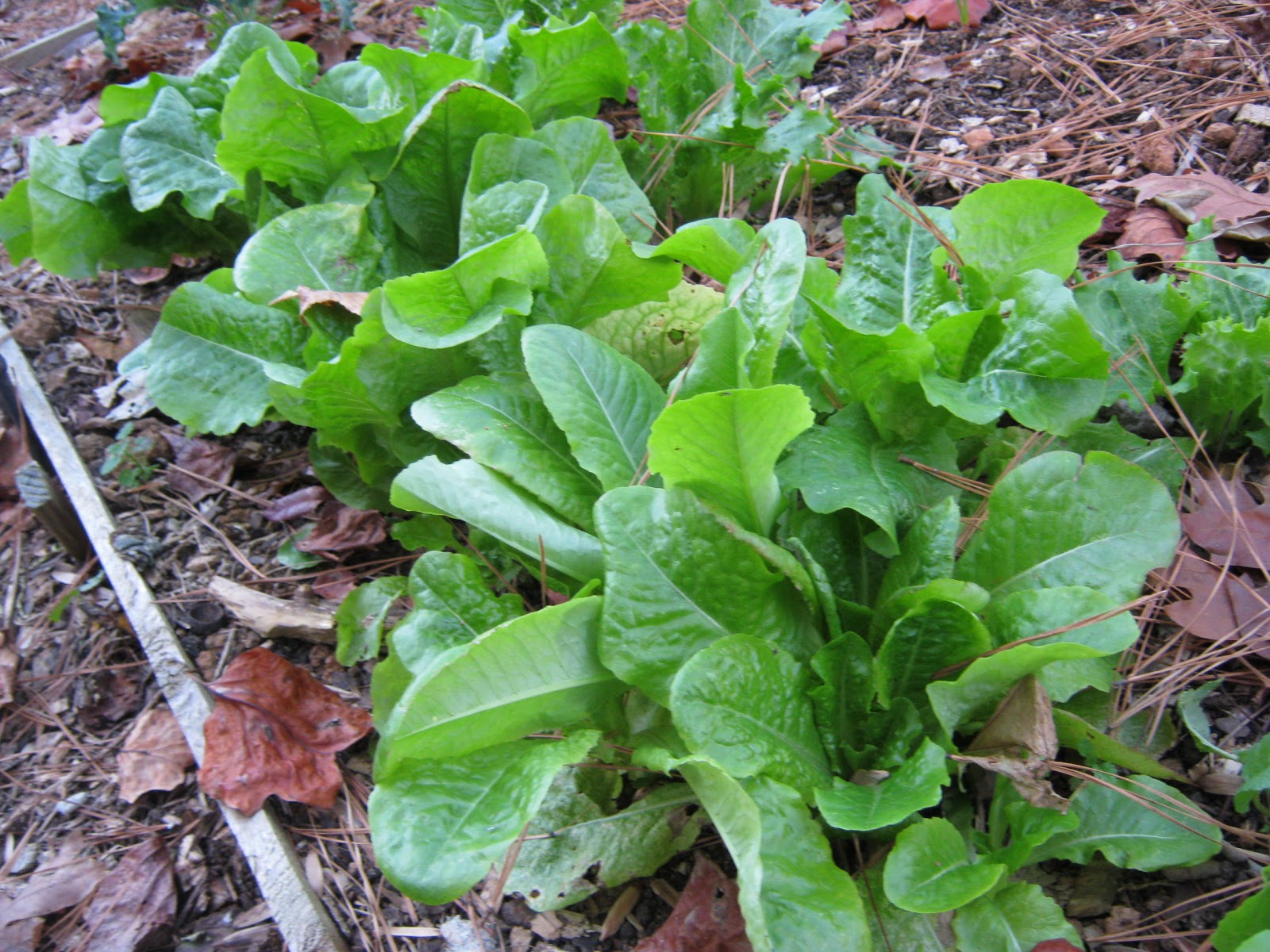
Spring is finally warming up, and in a big way. I've brought in a lot of the lettuce to store in the fridge, because the upcoming several-days-in-a-row of above 85 degrees F weather is likely to make what's left in the garden turn bitter.
Peas beginning to form.

Some of the other crops, though, are approaching their most shining time in the garden. One of those crops is the peas, which are beginning to make actual peas in the several areas where they are planted.

Two of those patches will be left to make food for humans, the rest will be cut down -- some to feed to my pet bunnies (who love pea shoots), and some to turn into the soil to feed the microscopic critters underground.
Potato foliage in the foreground, Allium family crops in the back.

The foliage on the potatoes is looking good, too. The little flowers indicate that potatoes are beginning to form underground.

Over the weekend, I added more compost around the leafy stems, partly to keep the soil as cool as possible for as long as possible, and partly to add a little more depth around the stems.

In general, potatoes are more productive when soil is "hilled" around the stems of the plants. The close spacing in these beds doesn't leave much room for hilling up the nearby soil, but adding more to the top of the bed should have the same effect. At least, that's the dream!
T
Big basket of spinach, that cooked down to about three cups.

Strawberries under netting.
I brought in the spinach over the weekend, too. It looked like a lot of food when I packed it all into the basket to bring inside, but that whole load of leaves cooked down to only about three cups.

We divided the cooked leaves into three portions and put them in the freezer for future meals.

Joe and I had been talking last week about our version of Shepherd's Pie; when the potatoes are ready to harvest, we are going to want this spinach to make some.
Cilantro bolting to flower in the warmer days of May.

The strawberries are starting to add their bright color and flavor to meals (we had some last night). Straight from the garden, they taste like spring!

Other berries in the yard are in flower, but it will be a few more weeks before any of the brambleberries are ready for eating.
As the days have begun to warm, the cilantro has decided that it's time to finish its life cycle and put out flowers and seeds. No one is especially happy about this development (it seems early), but I will be planting seeds for more, soon.

Meanwhile, we will all just enjoy what we have. Joe and I will be using some of the larger leaves from closer to the base of each plant in some guacamole tonight, and our bunnies will be eating some of the taller flowering stems that have bolted up from the base.

There is a little trellis behind the cilantro patch that I've planted a few "Greasy Beans" underneath. When the cilantro is finally in sad enough shape that I pull it up, there will be beans twining up from behind to fill that space. In my mind, it is already beautiful.

And this last picture isn't of plants (or supper), it is of two Best Friends, Holstein and Darwin -- two of my pet bunnies. Holstein is less symmetrical than she used to be. Her face is a little lopsided, and she lists to the right when she walks. The vet said she'd had a "neurological event," which I'm interpreting to mean that she'd had a stroke. She and Darwin are usually pressed right up together, even when they are eating their bunny salad. They are happy to eat the good food that is growing in our garden!
Holstein and Darwin think everything grown in the garden is for them.

Thursday, March 27, 2014

Generosity of Gardeners

Earlier this week, a gardener from the Plant-a-Row-for-the-Hungry project in Kennesaw stopped by the Extension office with some seed potatoes leftover from that project's big potato-planting day, for us to give away to anyone who stopped by the office and might want to plant some potatoes this year. I've been pushing seed potatoes all week, as a result. 

A new gardener in the area had "scored" a lot of free seeds  - way more than she can plant - and she dropped those extra packets off at the office, for me to give away at tonight's Vegetable Garden Basics class. Last week that same gardener brought over some "Growums" seed starting kits that she'd picked up on sale, and we've been giving those to people who want to garden with children.

I'd already been giving away seed packets that had been brought over by the Keep Cobb Beautiful office, since we get more vegetable-gardener traffic than they do.

We have a lot of seed packets from the Georgia Department of Transportation, too, all full of Cosmos seeds. Cosmos are great flowers for attracting pollinators.

Can I just say, now, how great it is to be in the center of this hub of garden generosity? I tell people that I   am "all about growing good food," and it is wonderful to see that a lot of other people are the same way!

Most of the "free seeds" are packets from 2013, so the germination rates are not going to be as high as for fresher seed, but planting a few more seeds per foot or per pot than usual will give a gardener plenty of plants.The seed potatoes (Kennebec and Red Pontiac) are for this year, and they are forming good eyes. Anyone who is interested in stopping by Cobb Extension to pick up a few seed potatoes should call the office (770-528-4070) to make sure there are still some here, but as of today, March 27, there are enough to provide for several more small gardens.

Monday, March 17, 2014

Seedling and Potato Progress

My indoor seedlings are making good progress:
Pepper seedlings need to be bumped up to separate pots.

Tomato seedlings that moved into these "6-packs" two weeks ago are almost ready for new, larger pots.
I didn't work on these seedlings over the weekend (they should be fine for a few more days as they are), because I focused my gardening energy on getting the seed potatoes planted outside.

The crop rotation schedule that I designed has a flaw in that, some years, the tomato-family plants end up with less space than I would prefer, because not all of my garden beds are the same size. This year, the tomato/potato/pepper/eggplant space is alarmingly tight.

To make sure there would be enough room for everything, I hacked up some more lawn out at the ends of two beds for potato-space. After peeling off the turf part, I dumped on an inch or so of compost and dug that a couple of inches down into the awful red clay. Then I layered on more compost, laid out the seed potatoes on top, then spread another couple of inches of compost over the seed potatoes.

After the seed potatoes have sent greenery up above the surface, I'll pile on some more compost, then finish the top off with some old hay. As the plants grow, I'll water them a few times with a little fish emulsion solution for an extra phosphorus kick. At least, that's the current plan.

While poking around online to decide whether my plan could work, I found a really great article in Mother Earth News about growing potatoes organically. The article "How to Grow Organic Potatoes" is an interview with Jim Gerritsen, a professional grower in Maine, that hits all aspects of growing, and it even includes information for gardeners here in the South. The article goes on for quite a few pages, but, for anyone planning to grow organic potatoes, it's worth taking the time to read.


Saturday, March 8, 2014

Potatoes and Lettuce and Peas (and More!)

It's been a beautiful day for getting things done in the garden, so of course I am running behind. I spent part of my day just sitting on the back deck, listening to birds and admiring the trays of seedlings that I had moved out to a dappled spot.

The good news is that the trout lilies are blooming in my yard, and that is my signal that the soil is warm enough that peas and other cool-season crops planted now will actually germinate and grow rather than rot in too-cold soil.

I've planted some peas, planted out some little lettuces that I had started indoors a few weeks back, and planted some radish seeds. If all goes well tomorrow, I'll plant some more peas, lettuces, and radishes, and possibly also some spinach and beets.

Not all of the peas that I plant this weekend will be left in place long enough to produce peas; some are going to serve as a late-spring cover crop and will be turned back into the soil about six weeks from now. They will help get the soil in shape for the summer crops that will follow them.

The garlic, shallots, and multiplying onions all made it through the worst of winter and look good. I am hoping that the cold will actually help the hard-neck garlic! When the winter is warm, they don't make as many cloves-per-bulb.

When those onion-family crops all come out in June, they will be followed by a late planting of tomatoes. The June-planted tomatoes won't produce until late August, but they will give my tomato-supply a welcome boost when they finally begin to ripen!

I've also set out (possibly too early) some seed potatoes. On a quick run through Home Depot I saw a display of boxes of seed potatoes, and I found myself buying a pound of Kennebec potatoes in addition to whatever it was we went in for. When I got the box home, the seed potatoes already had good eyes, so after a few days I went ahead and planted them. They haven't poked any green up above the surface yet, which is good, because there is more cold ahead, I'm sure.

I had already placed a small order through the Potato Garden for a pound of Garnet Chili seed potatoes (I grew them once before, and my recollection is that they were wonderful), a pound of Red Pontiac seed potatoes (good to eat and super productive in my yard), and a pound of Rose Finn Apple Fingerlings that a friend wanted a half-pound of, so we will be sharing those. The box of seed potatoes arrived in yesterday's mail. None of the spuds in the box have developed good eyes yet, so it will be another week or two before those can be planted outside.

Really, though, the urge to fill the garden with cool season crops is very hard to resist; there is so much good food that can be planted and grown successfully now! Sadly, most of those crops wouldn't be ready to harvest until sometime in May -- well past the time when I will want to have some of my summer crops planted.  If I want those summer crops ready to harvest in a timely manner, I can't fill the garden with cool-season crops now.

It helps that I spent part of my time at home in the last winter storm mapping out a plan for my 2014 garden; the map/plan supports my resolve to keep my hands off the packs of broccoli, collards, etc plants at the garden stores, so I'll have space for all the peppers, squash, okra, tomatoes, eggplants, cucumbers, sweet potatoes, white potatoes, melons, beans, parching corn, etc. that I have planned to grow in my little garden.

Hope that everyone else is enjoying the beautiful weather!

Saturday, February 23, 2013

Setting Potatoes Out to Sprout (Chitting)

The seed potatoes that my Mom sent from Oklahoma arrived safely, and I sliced them into egg-sized chunks several days ago. After letting them dry with the cut-sides up, I've turned them eyes-up in a tray to let new sprouts develop in the light.


I know that some people place their cut-spuds in the dark for this chitting. (A little off topic -- even though the word "chit," when used as a verb, refers to the sprouting process generally, I've only ever seen it used with potatoes.)

However, when the sprouts form in the dark, they tend to elongate rapidly and become brittle. As a result, they are very easy to break off accidentally during planting. If the sprouts are formed on potatoes in the light, they are stockier, a beautiful, healthy green, and less likely to get knocked off or broken during planting.

This North Carolina State University fact-sheet on Irish (or white) potatoes includes a helpful illustration and explanation of how to know where to slice seed potatoes to get good pieces for planting, and it also offers the useful reminder to eager gardeners to wait for slightly less-cold weather before planting. Some of the University-originated information published on home garden potatoes use 45 degrees F as the minimum soil temperature for planting seed potatoes, but the NCSU fact sheet suggests waiting for a higher temperature - 50 degrees F.

I probably won't wait quite that long, but today the garden is soggy; we've just had another three inches of rain. It will take a few days for enough of that water to drain away that it will be safe to work in the garden.

Monday, February 11, 2013

The Seeds of Spring are Planted in the Dining Room

In the best of all possible worlds, I would have a cute little heated greenhouse that I could start seeds in for my early spring/summer vegetable crops; instead, I have a big glass door and some fluorescent lights in the dining room. The good news is my current set-up, though somewhat limited in terms of space, works just fine.

Mid-Feb. is a little early for starting most of my seeds, but I am scheduled to give a presentation on seed starting on Feb. 19, and I want to have little plants up and growing for "show & tell."  By then, it will no longer be absurdly early, and the people who sign up and start seeds with me at the talk will be all set for some successful growing.

My seedlings that are coming up now, on the other hand, are at risk of spending too long indoors and getting too lanky as a result. I might need to go find another light or two to help brighten my plant-babies' lives and keep them stockier.

There will be some planting outdoors soon, too. I'll be planting onion sets as soon as I can find them, and even though it's a bit early still for peas, we are getting close. I usually judge the readiness of the soil by when the trout lilies bloom in my yard. I'm not seeing flowers yet, but the speckled leaves are coming up by the back fence.

Here in Cobb County, we have until about mid-March to get seed potatoes in the ground, but I have already dumped a load of compost on the spot where those will go this year. In the past, when I've had a chance to visit my Mom in Oklahoma in late winter, I've bought my seed potatoes at the little grocery store down the street from her house. They typically cost about 50-69 cents a pound, and they work just fine.

Since I haven't been able to visit recently, Mom went to get some for me and put them in the mail. She picked up some Red Pontiac, White Cobbler (my favorite), and Kennebec.When those arrive, I'll cut them into egg-sized chunks, each with a couple of eyes, and set them in a warm place to get them growing before they are planted out. The warm place will be (you guessed it!) the dining room.


Sunday, November 25, 2012

First Frost in Our Yard!

We heard that there was a frost coming, but very few of the plants currently out there needed protection. However, I was hoping to be able to help the potatoes through the night; they are very tender.

I piled leaves around the stems and draped a flannel sheet over the patch, but the freeze was deeper than just a little dip down to 32 degrees.

In the end, the measures I took weren't enough. The stems of the potato plants (and the nasturtiums) turned to mush.

The good news is that, even though most of the spuds had only pushed plants up out of the ground a month or so ago, a couple had come up earlier, and there was a little harvest to dig up today.

When I had dug up last spring's potatoes, I had saved some of the little ones in the fridge to replant in August. I was hoping to trick the little spuds into thinking that their dormancy period was over, but the trick only worked on a couple of them. I'll have to rethink the plan next summer to figure out a way to get a more abundant autumn harvest. I'm pleased enough that the couple of early-birds produced a few spuds for us, and we are looking forward to eating them.

Along with the spuds, I brought in some broccoli to serve with tonight's supper and a winter radish to have sliced thin and salted with our pre-dinner snacks. The potatoes will be for another day.
The freeze wasn't hard enough to harm the cauliflower, which is good, because they are the most tender of the brassicas out in the yard. Broccoli and cabbages can take much lower temperatures without harm.

We had one of the cabbages - the first of the season! - with our Thanksgiving Day meal. There are more that are getting close to harvest-size.
Elsewhere in the garden, the garlic are still all below ground, but the shallots are coming up.
The lettuces are still perking away - but we've had a lot less of these than my bunnies have. Moonpie and her babies are pretty big lettuce-eaters.
Overall, I'd have to say that the yard made it through this first very late frost in good shape. The weird part is that it Really Was the First Frost! I think that the official UGA weather station in Dallas, GA, recorded a frost about a week ago, but it was on a night for which the temperatures were patchy - my yard made it through that earlier "frost" without any frost at all. Last night - the night of Nov. 24 - was the first for my yard.

I'm not going to complain (I usually expect a first frost around the end of October), but I will say that it's weird.


Sunday, May 27, 2012

Garlic! Potatoes! Etc.!

The garlic and potatoes, both in the same bed, have been looking pretty miserable for a while now, so I finally dug them all up. The harvest was a big (emphasis on Big!) surprise. The Rabun County garlic is the pile of big bulbs on the left in the picture:

It's a little hard to tell from the very busy photo, but a couple of those Rabun County bulbs are almost four inches in diameter. Needless to say, I'm "pleased as Punch." Most of the rest of the harvest turned out well, too, although the Elephant garlic was disappointingly average.  I haven't weighed the bulbs yet. I'm going to leave them out on the shady front porch for a couple of days to dry out a little, then finish trimming the bulbs (I already trimmed off the rootlets).

I had been thinking that the potato harvest would be pathetic, considering the weather this spring, but it wasn't. I ended up with a little more than eighteen pounds of spuds from my two five-foot rows. The two rows were crammed into a space that is only about two feet wide, and I had thought, at planting time, that maybe I should just be planting one row in that narrow space, but there I was with extra seed potatoes and only a little space.

The White Cobbler was a lot more productive than the Red Pontiac, but that may be a result of the warm spring. I think White Cobbler tolerates the heat a little better.

The basket to the right in the picture above contains the tiny harvest from the multiplier onions. I plant these every year, in spite of the lack of robust productivity, on the chance that, one of these years, I will figure out exactly the right combination of everything to make these work for me. It is possible that our winters are just too warm for them, but the notion of being able to replant onions each year without actually having to buy sets or starts of any kind is appealing enough that I am not giving up yet.

In other news, this is yesterday's harvest from the garden:

It still seems insanely early to be bringing in zucchini, but here they are!

And in yet other news, a couple of the baby bunnies will be heading off to new homes this week. Einstein (black with a white head) will be going home tomorrow afternoon, and Louie (the brown-with-silvering baby, soon to be called Darwin), will be heading toward his new home on Wednesday.

Since they are only about nine weeks old, this all feels like progress!

We plan to keep a white bunny (Burrito), as a companion for Mama Moonpie, but the other white (Tiny) and the black and white one (Holstein) that is almost like a Dutch breed bunny still need a home.

To get them all together for a group photo, I dropped a handful of alfalfa hay into the middle of their Timothy hay. They love alfalfa hay!


When the crowd has thinned out some, it will probably seem strange to be able to sweep the bunny enclosure without having two or more babies hopping into the dust pan, another one chasing the broom, and one or two others trying to sit on my feet, but I am sure I will get used to it.

Sunday, February 26, 2012

Summer Begins in February

Even though it's been a warm winter, it hasn't been exactly summer-like, and even though I've been enjoying the vegetables of winter, I have been hankering after some fresh summertime veggies. The good and the bad news is that a lot of summertime veggies need to get their start long before summer. Tomatoes, peppers, and eggplants, in particular, have a long time-to-maturity, which means their seeds need to be planted indoors now, or even a week or two ago.

I had thought about starting some seeds earlier, but last week I was in Oklahoma with my Mom, who was recovering from hip-replacement surgery. I didn't want to leave just-germinated seedlings for my family to tend, since they would have plenty of other things to manage while I was away, so I waited.

Happily, not only is Mom doing very well, but yesterday afternoon I filled most of a tray of those "Jiffy" peat-pellets with seeds. Part of the tray is yet-to-be-filled, because the seeds I've ordered aren't here yet, but most of the tomato and pepper seeds for this year are in the tray, as are the eggplant, parsley, marjoram, basil, and a pink Salvia. It feels great to have made a start on the summer garden!

I also planted (in the ground) some seed-potatoes yesterday. There is a short row of Red Pontiac and a short row of White Cobbler. At the end of the potato area I planted some spinach seeds (Tyee), and along one side of the trellis I planted a row of lettuces (Capitan). The seeds were leftovers from previous years, but I found the seed potatoes at Mom's neighborhood grocery store in Choctaw, Oklahoma. The seed potatoes, which were 59 cents a pound, were in a bin in the produce department, along with several varieties of onion sets.

The weather isn't spectacularly warm, but the high temperature yesterday, and forecast again for today, is the mid-50s. That's plenty warm for doing some serious work in the yard. I expect to spend much of this afternoon outside. Hope everyone else is having a beautiful weekend!

Thursday, February 11, 2010

Potato Thoughts

I have been thinking a lot about potatoes lately, partly because I am growing some from seeds I saved (back in 2007) when a couple of potato plants in my yard flowered and actually set seed.

So far, my potato plants from seeds look just fine; they appear to be a lot less sturdy than the shoots that come up from seed-potatoes, but that is to be expected. The tiny true seeds contain a lot less in reserves.


I have no idea how this potato experiment is going to work out, but Carol Deppe, in her book Breed Your Own Vegetable Varieties, tells about a guy who breeds potatoes by growing the seeds. It really is the only way (besides random mutations) to get new varieties. The seeds grow for him, and the resulting plants produce potatoes. When he digs up the potatoes and discovers a new kind that he likes, he saves the actual potatoes to replant (the usual way) to increase the numbers of potatoes in that line, until he has enough to sell or share.

James Lang, in his book Notes of a Potato Watcher, tells about a different potato breeding effort, this one by the CIP (International Potato Council), to produce disease free starts, both cleaner seed potatoes and actual seeds, for farmers in developing countries.

CIP was working on this because plants that are infected by many diseases are less productive than uninfected plants. It turns out that the true seeds are much more free of disease than seed potatoes saved from an infected field. (Not a huge surprise.)

One way farmers in the Andes traditionally addressed this disease problem was that seed potatoes were typically produced at higher altitudes, where it was colder and the disease pressure was less. Farmers at lower (warmer) altitudes bought fresh seed potatoes every few years to get cleaner stock, when their potato production dropped.

CIP’s initial effort to grow potatoes from true seeds (as a way to cut back on the disease problems) was somewhat successful, but when the little plants were set directly into the field they did not produce well. What worked better was to let the little plants develop a tiny potato each while they were in the seedbed, then to plant the tiny potatoes in the field.

In the end, the CIP did finally develop a hybrid seed that worked well without having to wait long enough that a tiny potato had formed and could be transplanted to the field.

When I saw that bit in the book about diseases in warmer areas, I thought right away about my yard here in Georgia. Saving seed potatoes would probably not be a good idea for me, even if I could manage to actually save some from each year’s crop (we eat them all). The disease pressure here is intense for many kinds of vegetables. If my growing-potato-plants-from-true-seeds experiment actually works, I will be able to avoid the expense of buying seed potatoes every year AND avoid having to worry about whether what I’ve saved from last year is ok to replant.