Showing posts with label broccoli. Show all posts

Wednesday, October 22, 2014

Garden's Progress

A couple of broccoli plants that had been set out in July. 
In one of my several garden-experiments this year, I set out some broccoli and cabbage transplants Very Early.  I had started the plants from seeds in June to use as "visual aids" in a class I would be teaching in July.

After the class, it seemed a shame to waste the little plants (and the time/attention it took to grow them), so I went ahead and planted them in the garden, even though we had plenty of hot weather ahead. It turns out that the broccoli that was set out to grow through the hottest months of summer  got really tall and then produced quite-small heads of florets.
Broccoli and cauliflower under netting.   
Pasilla bajio pepper plant.  

Considering that I didn't really expect them to produce at all, this is sort of a success story. However, I am hoping that the tall plants will start producing side-shoots of florets for us to harvest, so the little broccoli heads won't be all that we get from these plants.

The cabbages from that same batch of transplants are beginning to head up, and I am waiting to see whether those will stay small, like the heads of the broccoli, or put on some size.

The most-recently planted broccoli and cauliflower plants have settled in nicely, and should begin to pour on the steam (in terms of growth) pretty soon. Until we get some colder weather, the plants will stay under netting, to keep the butterflies and moths that are the parents of cabbage worms and cabbage loopers from laying eggs on them.

Meanwhile, the peppers still are coming into the kitchen. The Pasillo bajio peppers only just started to "make" a few weeks ago, but they are worth the wait for gardeners who also do a lot of cooking.  Those skinny peppers have full-sized flavor!

Some of the peanuts from our garden. 

In the kitchen, we've been enjoying the beginnings of the winter greens: kale and collards. We've also brought in plenty of radishes. We eat the radish part, and I feed the leaves to my pet bunnies.

The cilantro is flourishing; some baby parsley plants look as though they will help make great tabbouleh in spring; beets and carrots are growing well; the parsnips finally got beyond the seedling stage (it's a slow crop); the earliest-planted lettuces are nearly full-size; the spinach patch is darkly green with leaves that are about half the size I expect to see at maturity; bok choy will be ready for harvest in a few weeks; and it won't be long before I will need to plant the garlic, shallots, and multiplying onions. This is a great season for gardeners!

Tuesday, October 7, 2014

My Family Wants More Broccoli

I never manage to grow anything like the amount of broccoli, cabbage, and cauliflower that my family would like for me to, because our garden really isn't very big. Allowing for things like crop rotation, succession planting, and cover crops can mean that, some years, there is room for even less.

In theory, this was going to be one of those "less" years, but somehow, while we were out on our errand-run over the weekend, we ended up with two additional packs of transplants -- nine broccoli and nine cauliflower -- to add to what's already in the garden. As a result, for the past couple of evenings I've been working on making space for those 18 plants in the garden.

Luckily, I've collected enough mature Joanie Beans for next year's seed and harvested enough Pigott Family Cowpeas to make me happy. That meant I could pull all the bush bean and cowpea plants, creating a space large enough for about two-thirds of those transplants. Where the rest will go, I do not yet know, but I will think of something.

If the pH of the soil in my lawn were higher, I'd follow the example of UGA's Center for Urban Agriculture and just plunk those plants into the lawn. I saw the experiment that showed this was possible at a Turfgrass Field Day down in Griffin, GA, and it was just wonderful.

Cool-season garden vegetables had been planted in strips cut into a Bermudagrass lawn. In the experiment, strip width and plot sizes varied, to check the effect on both the veggies and the recovery in spring of the lawn. While the lettuce, cabbage, and collards did not produce well in the narrower (13 cm) strips or when direct-planted in the lawn, broccoli produced a crop (though some were small) in every treatment.

Most of the strips were somewhat weedy in spring (crabgrass liked that bare soil), and in some strips the ground had become uneven, but there was broccoli, making a crop in the Bermudagrass. Even just thinking about it makes me smile.

Wednesday, September 25, 2013

Garden Update

September peppers.
There haven't been many photos in the blog lately, because I've had camera "issues." At this point, those issues are mostly resolved, so I finally went outside in daylight to take some pictures for a simple garden update.

The summer crop that is still coming in strong is the peppers. All varieties across the whole bed are doing well. The tomatoes, even the ones planted latest, are mostly limping along. I'm bringing in a few tomatoes each week, but not great piles of them like I would normally be harvesting in September.
Buckwheat cover crop, ready to be mowed down.

The buckwheat that was planted across the top of the spinach-beet bed is doing great. Soon, I will be mowing that down (or Joe will, with the weed-whacker), then turning it under to get the space ready for a winter cover crop.

Some animal(s) out in the yard have been treating the rows of spinach and beet seedlings like a personal snack bar, and I may, as a result, end up reseeding all those rows. This is an annoying turn of events, but not a total surprise. A creek borders our yard on one side, which means we have plenty of drop-in "guests" of the four-legged, furry persuasion. The creek is like a natural highway that connects parks and fields in the area. My yard is just a scenic-turnout that happens to also include a couple of fast-food establishments.


Cabbage-family snacks for rabbits.
 The cabbage and broccoli plants have established nicely and have begun to really grow, but the little green stick front-and-center of the photo to the left is the remains of another animal snack -- kind of like a broccoli-sicle stick instead of a popsicle stick.

However, I have another nine-pack of broccoli to plant, and it is enough to replace all of the most severely munched plants, with some left to plant further down the bed.

Healthy horseradish.
The horseradish, that we don't even really like to eat, is looking pretty amazing. The friend who gave me the chunk of root with which to start my plant said that the flowers would be lovely, but I haven't seen any flowers yet. I've had the plant for at least three years, so I'm thinking that I might not get to see flowers.

The plant is getting too big for its pot, and I'm expecting to re-pot it this coming spring, dividing the root to share and to make some horseradish sauce. Maybe I'll find a recipe for sauce that we like!

This year, most of my plants were in the ground, but I have seen horseradish so healthy that it threatened to take over whole yards. Mine is going to stay in a pot.

Over in the side yard, the sweet potato vines seem to be contemplating some kind of take-over. They have flowed into the next bed and across the newly-laid centipede-&-nutsedge sod that the water department put down after replacing the neighborhood water mains.
This year's sweet-potato glacier, slowly creeping across the yard.

In the picture to the right, a few okra plants can be seen along the left of the photo; they are holding their own among the vines and producing just enough okra for us to include some in a meal every few days.

It will be time to dig up those sweet potatoes very soon. I'm planning to manage that sometime in the first week of October. The slips were planted back in May, which means the plants have had PLENTY of time to make sweets for me by now.

Carrots to the left, winter radishes to the right.
The carrot and winter radish bed looks pretty good. There are still some places in the rows where carrots didn't come up, and it isn't too late to drop in a few seeds in those gaps. We are getting rain today, so it will have to be on another day, but I am thinking that there is still time for a few very late carrots.

The last seeds in won't yield mature carrots until sometime in the spring, but that's okay. I will have harvested plenty of other carrots by then, from the earlier-planted seeds.

Hope everyone else's gardens are doing well!

Tuesday, September 10, 2013

Fall Planting, Continued

I've made more progress in getting the fall crops planted, but I am beginning to fall behind. It's almost mid-September!

Last Saturday morning, I planted 102 cabbage-family plants out at the little farm on Dallas Highway where I volunteer. Joe was out of town, and most of the rest of the volunteers had been busy on the tractors the day before. That left just me to prepare the beds, space the transplants, make the holes, set in the little plants, water, then give each plant a shot of fish-emulsion as starter fertilizer. Can I just mention here that I was pretty tired after that long morning? 

In my own yard, I worked on clearing away the parching corn and preparing that space for planting. Then yesterday after work I managed to get my cabbages and broccoli in the ground.  Rabbits had eaten the tops off of most of the little plants that I had started from seed  -- I had set the tray of plants out in the yard, where the seedlings would get plenty of sunshine -- which means that about 3/4 of those plants in my garden now are from a garden center. This morning, though, they all still look good.

The carrots, winter radishes, beets, spinach, and patch of buckwheat (as a cover crop) that were planted earlier are up and growing. There are a few gaps here and there in the rows of vegetables where I will need to put in a little more seed, but not many.  The long stretch of rain that we had this year has made it seem weird to have to water the seedlings, but that's what I've had to do -- stand out in the yard with a hose to make sure the little seedlings don't dry up and blow away.

I still need to get the lettuce (and other various) seedlings into the ground, and I have some other seeds to plant. If all goes well, I'll manage to finish it all sometime this coming weekend.

Meanwhile, the patch of green beans that I planted in early July is providing plenty of beans, there are still peppers and tomatoes coming in, the eggplants look as though they are putting on a new flush of flowers, the sweet potato vines are sprawled all over the place, and just looking at all that exuberant growth makes me smile.

Hope everyone else's fall planting is on track!


Wednesday, January 23, 2013

Garden Update

Last week we had a series of wet days that resulted in our getting about 4 inches of rain. I am hoping that the deeper soils are benefiting from all that moisture! This week, though, we were supposed to have actual winter - with overnight lows in the low twenties.

On Monday, having seen the forecast, I spent a little time getting the garden ready. There is second a patch of broccoli that was planted very late, and the plants never did get very large, but they all finally developed little heads of florets on top. Temperatures in the low twenties likely would have damaged the little heads, so I harvested them. I didn't want to lose the good food, even though it wasn't much. If these plants had been purchased only for food, this would have been a total bust in terms of payback, but these plants were used in a demonstration about raised bed gardening, so I'm not especially unhappy with the outcome. The plants were dual-purpose! Even better, the little harvest provided some very tasty broccoli for last night's stir-fry.

We've been getting fairly continuous harvests of side-shoots from the earlier-planted broccoli, but on Monday I pulled that all up. Over time, the flavor of the little shoots on these older plants had declined, becoming less sweet and more sulfur-y (not a word, I know). Since outstanding flavor from food in the garden is important, deciding to pull the plants up wasn't hard.

I also harvested the last of the cabbage. There were six small-ish heads all in good shape, and two that should have been harvested a week or two back. The outer leaves on those two had gone brown and a little slimy.

Sometimes, it can be hard to know when to harvest a crop -- the inclination is to leave it out in the garden just a little longer, so the plants can develop just a little more -- and I certainly fell into that trap with regard to the cabbage this year.
However, we only lost two cabbages. The rest are now either in "cold storage" (in the garage) or in the big fermenting jar becoming sauerkraut.

The only plants I covered up in advance of the forecast cold are the beets. I really like the tops for greens, and I didn't want them to turn mushy/slimy in the lower temperatures.

The garlic is growing well, and it didn't need any cold protection. The shallots and multiplier onions are also up and cheerily green, and a later planting of carrots, the winter radishes, some spinach and a bit of lettuce (that's started to turn bitter), one plant of Swiss chard, one plant of Kale, and an interesting assortment of weeds are all still providing variety in the meals of ourselves and of my bunnies. I'm not especially keen on bitter lettuce, but Moonpie and her babies love it!

As it turned out, the forecast actual winter failed to arrive. If the lack-of-really-cold-weather keeps up, we all will need to brace ourselves for another buggy and disease-filled gardening year.

Meanwhile, indoors, I am planning for spring.  I've been putting seed orders together, and the orders include what seems like a crazy number of packets for such a small gardening space, but when I look back over the lists of everything I've harvested  in the past year the numbers seem more reasonable.

I'm also planning a seed-starting talk that will be given in February, and I am making decisions about varieties to bring to that talk, too (there will be a hands-on activity for people who show up). Have I mentioned lately that I love my job? It lets me think about gardening and plants pretty much all the time!

Like last year, the daffodils have decided to herald the beginning of spring in January. I do enjoy the sunny flowers, but it's a bit discombobulating to see them so near bloom so early in the year.

They aren't alone in acting as though we are nearing February's end rather than January's end. Leaves of the Spanish bluebells are several inches high, and one of my hardy amaryllis has pushed leaves up into the air, too. Looks like we could have another very interesting gardening year!

Sunday, November 25, 2012

First Frost in Our Yard!

We heard that there was a frost coming, but very few of the plants currently out there needed protection. However, I was hoping to be able to help the potatoes through the night; they are very tender.

I piled leaves around the stems and draped a flannel sheet over the patch, but the freeze was deeper than just a little dip down to 32 degrees.

In the end, the measures I took weren't enough. The stems of the potato plants (and the nasturtiums) turned to mush.

The good news is that, even though most of the spuds had only pushed plants up out of the ground a month or so ago, a couple had come up earlier, and there was a little harvest to dig up today.

When I had dug up last spring's potatoes, I had saved some of the little ones in the fridge to replant in August. I was hoping to trick the little spuds into thinking that their dormancy period was over, but the trick only worked on a couple of them. I'll have to rethink the plan next summer to figure out a way to get a more abundant autumn harvest. I'm pleased enough that the couple of early-birds produced a few spuds for us, and we are looking forward to eating them.

Along with the spuds, I brought in some broccoli to serve with tonight's supper and a winter radish to have sliced thin and salted with our pre-dinner snacks. The potatoes will be for another day.
The freeze wasn't hard enough to harm the cauliflower, which is good, because they are the most tender of the brassicas out in the yard. Broccoli and cabbages can take much lower temperatures without harm.

We had one of the cabbages - the first of the season! - with our Thanksgiving Day meal. There are more that are getting close to harvest-size.
Elsewhere in the garden, the garlic are still all below ground, but the shallots are coming up.
The lettuces are still perking away - but we've had a lot less of these than my bunnies have. Moonpie and her babies are pretty big lettuce-eaters.
Overall, I'd have to say that the yard made it through this first very late frost in good shape. The weird part is that it Really Was the First Frost! I think that the official UGA weather station in Dallas, GA, recorded a frost about a week ago, but it was on a night for which the temperatures were patchy - my yard made it through that earlier "frost" without any frost at all. Last night - the night of Nov. 24 - was the first for my yard.

I'm not going to complain (I usually expect a first frost around the end of October), but I will say that it's weird.


Friday, October 26, 2012

State of the Garden Report

It's been a great year for peppers in my yard, but the season is just about at its close.

We'll be pulling up the pepper plants (see pathetic plants in photo below) this weekend, because the cool nights have taken their toll on the heat-loving plants. It won't help that the forecast includes a dip down into the mid-thirties within the next few days.

Other plants due for removal this weekend include the last of the eggplants.


If all goes well, I'll get the garlic planted - it's time - but it's probably better if I don't absolutely count on getting that done.

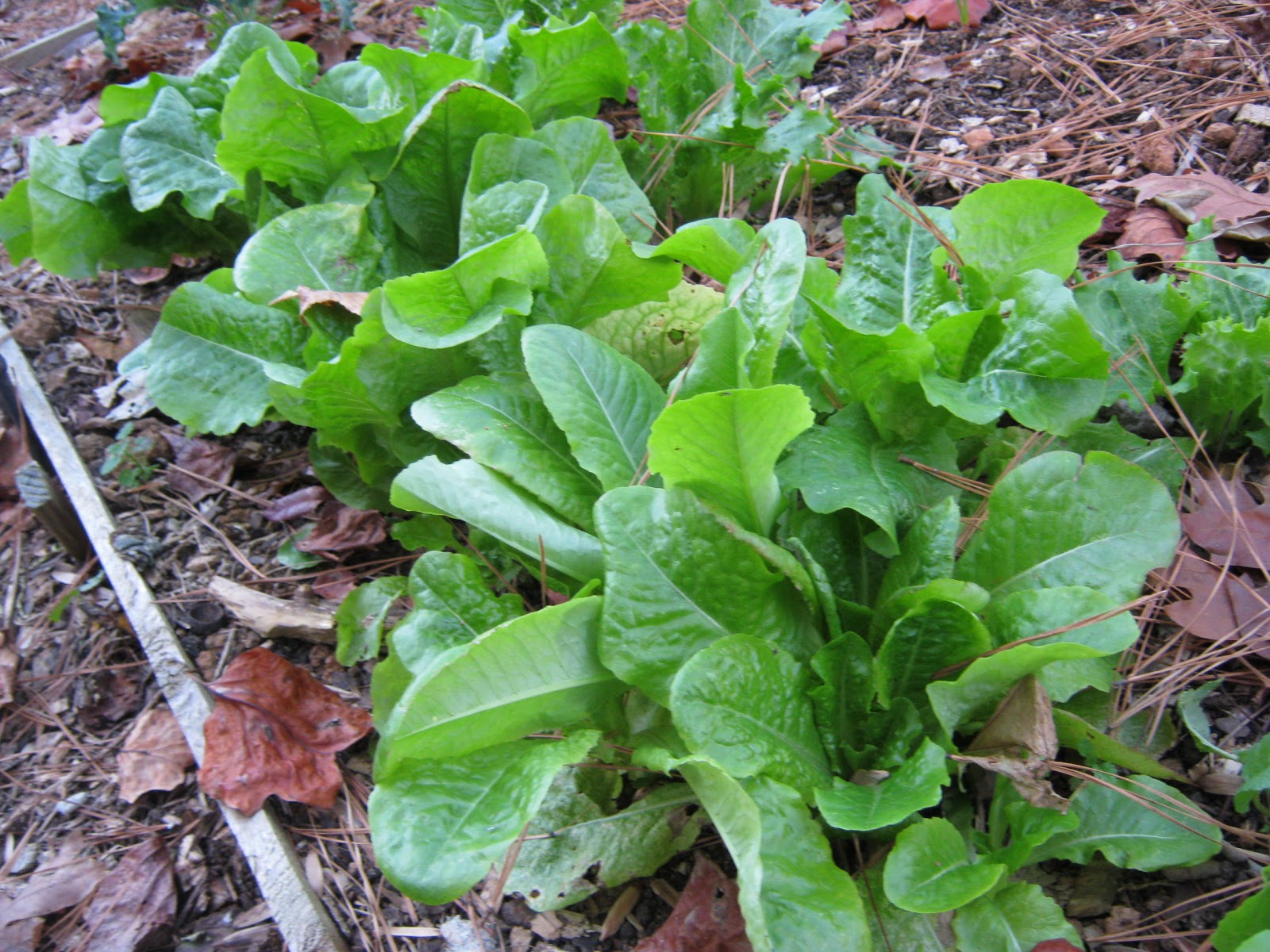
At this point, most of my cool-weather crops are looking very promising. The broccoli will be big enough to harvest soon!


The extra-cold weather heading my way can only help.  There are enough of these in the garden this year to make several good meals-worth of the central heads.

If this winter is anything like last winter and we don't get any hard freezes (with temperatures down into the teens or below), we could get more meals from the little side-shoots, too.


Joe, though, is looking forward to the cabbage harvest. He LOVES sauerkraut, and last year he wasn't able to make enough from the cabbage that was available.

This year, we have a dozen of our own plants to add to any harvested from the little farm where we volunteer on the weekends.

He will have to wait a few more weeks for the cabbage, but the first heads should be ready by Thanksgiving. At our house, the best batches of sauerkraut are the ones that are made in cooler weather. I don't know if that is because the whole process procedes at a slower pace or if it's because the mix of bacteria/fungi in the air is different.

Regardless, we've figured out that he needs to make his sauerkraut in fall, rather than in spring, even though we can grow cabbages that mature in April.

We've been eating some of the lettuces and spinach (not pictured), too. I've fed some of the tiny lettuces - that were pulled to thin the bed - to my bunnies, but I'm planning for most of the lettuce to feed the humans in the house.

This year's carrot patch is looking like it could be the best I've ever planted in this yard. If I am really lucky, next year when it's time to plant the fall carrots I'll be able to decipher my notes about what I did with the soil to make this happen. It's always great to be able to replicate a success.

Weather reports are calling for some fairly stunning storms (can I use the plural form, when what's really supposed to happen is a collision/combination of two?) north and east of here. I'm hoping for the best possible outcome for everyone in the affected areas!

May your hatches be safely battened down, your larders and water-stores sufficient to meet the need, and everyone make it through un-injured.

Sunday, March 21, 2010

Broccoli, beets, and boron

(An updated version of this post about the micronutrient boron is on my new website, Small Garden News. The update was made in 2019.)

In this area, when a garden’s soil test results come back from UGA, near the end of the report, in tiny print, is a note about adding boron to the soil for broccoli and beets. The recommendation is for 1 tablespoon of boron per 100 feet of row, or per 100 square feet.

Boron, an essential micronutrient for plant growth, tends to leach out of soils that receive a lot of rainfall, and the metro-Atlanta area usually (drought years excepted) gets at least 50 inches of rain each year. That counts as a lot.

The good news is that organic matter helps hold boron -- and other nutrients -- in the soil. This means that gardens to which organic matter has been added routinely are less likely to be deficient.

However, some plants need more Boron than others. Broccoli and beets are two that need more, but the Boron page of the Agronomic Library for Spectrum Analytics has a longer list of high-boron users, referred to as "high response crops," and the list includes other root vegetables in addition to home-garden staples like lettuce and corn. The page also includes a table of deficiency symptoms that might help a gardener figure out whether low boron is a problem in his or her garden.

I’m thinking about this now because I planted the carrot and beet seeds yesterday. Both are on the “high response crops” list, so I will be adding some to their space tomorrow (it is raining today).

Boron isn’t present in the usual NPK fertilizer formulations (which I will not be using again anyway), but it is available in the laundry-soap aisles of many grocery stores, as 20 Mule Team Borax. I never plant as much as 100 square feet of any one crop, so I adjust the amount of borax to match the approximate square footage that I’ve planted.

I usually add the borax to a full watering can and try to move the can smoothly over the planted area for even dispersal. It is also possible to just sprinkle the dry powder over the area, but any wind makes even distribution less likely.

I only add boron to the areas that are planted with “high response crops" each year, rather than the entire garden, because I don’t want to add too much. The problem with micronutrients is right in their category name, the prefix “micro.” They are useful only when present in very small amounts. Too much is as big a problem as too little, and getting rid of what’s already been added is much harder than adding more.