Friday, October 29, 2010

Fall Garden Clean-up

I finally finished clearing away the old asparagus stalks. I also worked today on clearing other parts of the garden. There were still some pepper plants in the side-yard beds, and I picked the last of the peppers before pulling up those plants.

Here they are, the last of the summer peppers:


That last Casper White eggplant is also in the box. The peppers were mostly fairly large; the Spanish Spice peppers were all seven to eight inches long. I had been hoping they would turn red, but that didn't happen. The weather has turned seasonably cool, so it was definitely time to bring those in, but I will have to chop them up to freeze as green peppers.

There were still some okra plants, some stumps of corn stalks, aging marigolds, and other flowers that were going to look very bad very soon. I filled the wheelbarrow with stuff, chopped up, for the compost pile.


One wheelbarrow load isn't going to be enough, though, for me to able to say those two beds are clear and ready for winter. There are still some flowers, the last of the basil, and all that Malabar spinach, in addition to a few cool-weather plants (winter radishes, cilantro, and a couple of turnips).


Really, clearing the garden in fall is almost as big a job as getting it all planted in spring.

This, though, is part of what motivates me:


This is the garlic that I planted just last weekend. It is already coming up! It looks like the "one big clove" that I thought I had planted here was actually one big clove with a little hitch-hiker. Two are coming up! However, even when what happens in the garden isn't quite what I had planned, seeing the food plants emerge and grow reminds me that the work is worthwhile.

Wednesday, October 27, 2010

Garden Distractions

Today I fully intended to finish removing the old asparagus stalks from the garden for the winter. They need to be removed for two reasons: the first is that the old stalks can harbor insects and diseases, the second is that they look terrible.

When I was about halfway through, though, I called my Mom to tell her what I was doing, because she has asparagus, too. That's when I looked up and saw the Casper White eggplant.


I thought we had eaten the last eggplant for the season last week, but it seems I was mistaken! There will be little bit more. When I glanced over at the Ukraine Beauty right next to it, I saw one more tiny eggplant there, too.


I can't imaging that this will have a chance to get much larger before cold weather kills the plant, but I hadn't expected to see this little fruit at all.

Since the broccoli is in the garden bed just across from the eggplants, I turned around to check on them, too. A lot of years I have less that wonderful luck with the broccoli, but I got another surprise.


Every plant has the beginnings of a head of broccoli nestled down in the leaves! I know very well the pitfalls of "counting chickens before they hatch," especially when it comes to gardening, but this looks very promising.

After all these great discoveries, I had to make a quick tour of the garden. This is a tough time of year for gardens. In spite of the patches of green from the cool weather crops, there are lots of bare spaces and brown (or browning) leaves dripping off of scraggly old stems, so that the visual rewards aren't all immediate.

The little tour showed, though, that insects are still finding sources of nectar in the flowers that remain. This bachelor's buttons plant had a couple of visitors, in spite of the cool, damp weather.


And the nasturtiums really just hit their peak a couple of weeks ago. We've had some rain in the last couple of days (1.3 inches!), so older flowers are a bit battered, but the more newly opened blossoms look great!


When I got this far, though, a wave of much darker clouds moved in; it had been drizzling for a while, but that didn't bother me. I'm not related to the Wicked Witch of the West, so I work outside even when it is wet - I'm not going to melt - but the thunder started and that was the end of being outside.

My next chance to work on the asparagus bed, if it doesn't come later today, will be Friday. Maybe I will finish then . . .

Saturday, October 23, 2010

Horehound Surprise

One of the herbs in my garden is horehound. This is not a delicious culinary herb; it is a bitter, medicinal herb traditionally used as a treatment for coughs and sore throats.

When I was growing up, this is one of the bad-tasting medicines that my father brought out when I complained about a sore throat. If I had an unhappy tummy, he mixed a teaspoon of baking soda in a glass of water and told me to drink it. This tasted worse than horehound, which at least was in candy form, so there was the consolation of a little sugar. Needless to say, there were very few minor health complaints at our house. None of us wanted to risk the bad-tasting home remedies!

Weirdly enough, I have grown to like horehound (but not the baking-soda and water).


One year, I made horehound candy with my own horehound, but I didn't know that the pieces absolutely had to be individually wrapped. I've made other hard candies before (cinnamon and anise flavors) and they kept just fine in a jar. When I put my horehound candy in a jar, though, it merged into one solid mass in the jar in just a couple of weeks.

This year, I'm going to pass on the candy-making, and just use the leaves for tea. There is a lot of horehound, so I've put some leaves in the freezer, and some are set out to dry.

The job turned out to be a bigger adventure that I expected; when I was out in the garden snipping leaves off the horehound, I found carrots!


The horehound grew really well this year, flopping over the space where last spring's carrots came out. I had harvested all the carrots that I could see months ago, but the horehound seems to have sheltered some seeds that hadn't germinated with the rest of the crop. If I had been a better weeder, these probably wouldn't have made it to maturity!

Wednesday, October 20, 2010

Fall Veggies on the Way

The summer garden is almost all done. There are still some tomatoes hanging on, but the plants look like heck. Have you ever seen so many brown, dead leaves? I've left the plants this long so that the remaining tomatoes could get a little more mature. Lots of those tomatoes will ripen just fine in the house, but some need a little more sunshine and feeding from the plant for that to happen.


The cooler weather crops are making good progress. We've eaten one head of the bok choy, and the rest (there were only seven) look good, too. This makes two years in a row that the bok choy has done well. I am not sure whether it is the result of something I've done (planting them early enough in August?) or just a fluke, but I am happy about the success, however it has been achieved.


It looks as though I might actually get carrots for Thanksgiving this year, too. This hardly ever happens. Usually, the carrots aren't big enough to eat until closer to January. One of the neighborhood rascals made the sign for the carrots (they are a vegetable he might actually eat). He wanted to write the label with a Sharpie, but I have heard from his mother that her children are not reliable with permanent markers, so I brought out crayons, which seem to have worked. His handwriting is excellent!


The lettuces are doing moderately well. I don't know whether the germination rate was very low, or the "infant mortality" rate very high, but something happened that resulted in a lot fewer lettuces in the garden than expected. August was exceptionally hot, which might have interfered with germination of the lettuce seeds, and we have hardly had rain (surprise!) for weeks and weeks, which could have resulted in a too-dry situation for baby lettuces to survive. And, it could just be that I messed something up. Hard to know.

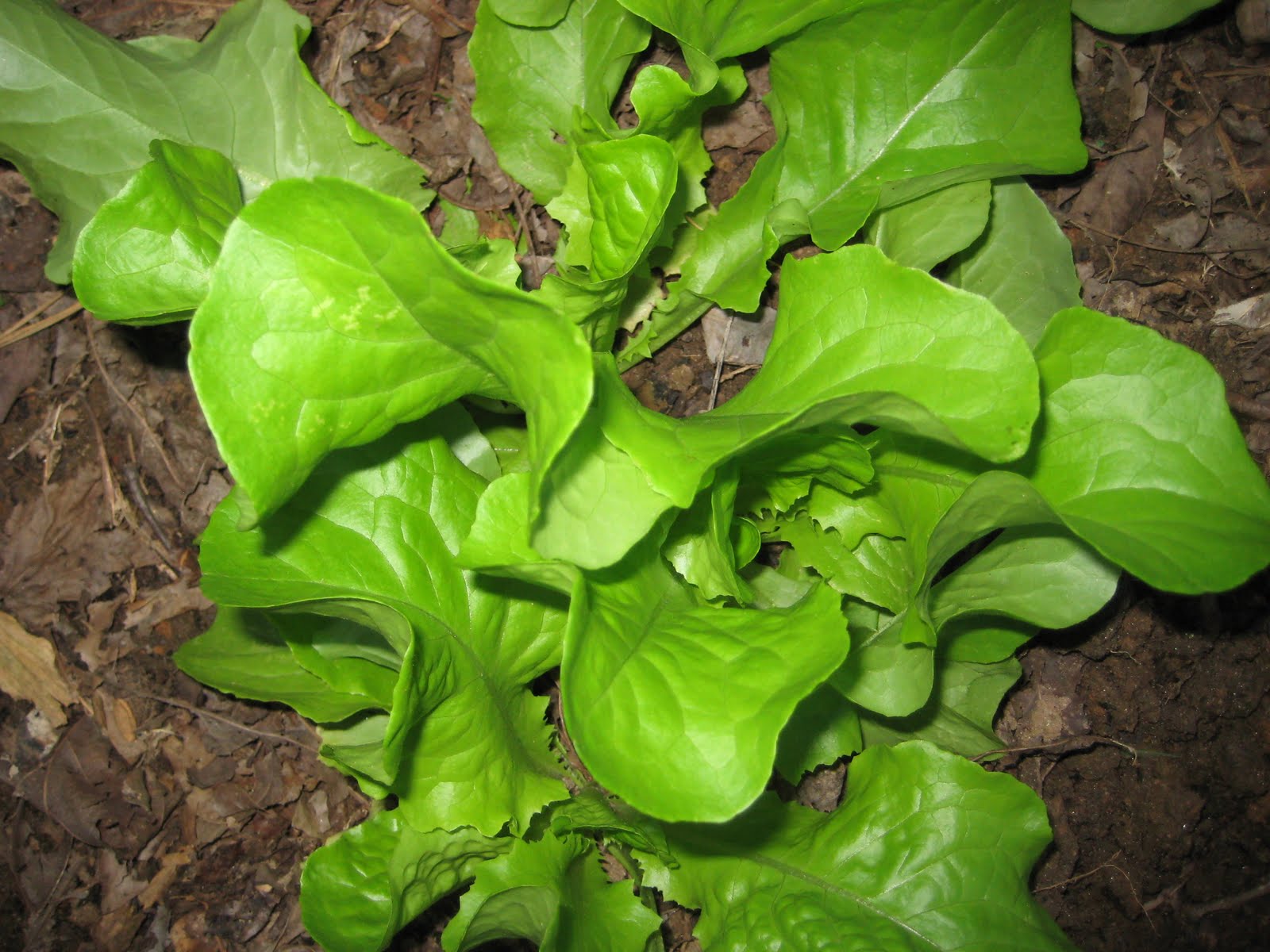
The good news is that the lettuces that have survived thus far look great!


This weekend, I will probably finish pulling the tomato and pepper plants from the garden and hunt under the house for the cold frame so I can put it over the lettuces. When I get it in place, I plan to plant more lettuces and spinach. They won't grow very quickly, but they will grow, giving us greens in the winter.

Friday, October 15, 2010

Shiitake

My shiitake-innoculated log is still just a log, even though it is almost two years old. However, the log of my friend Susan (whose log is from the source, on the same day) is making mushrooms!


She says the secret may be "benign neglect." We had been told to "plant" the logs; she planted hers in a container, then stuck it in the shade under a holly. She then pretty much forgot about it, until a couple of weeks ago, when she noticed that it looked different.

I am so happy to see those mushrooms. They give me hope that my log, too, will someday burst with fungal fruiting bodies.

Sunday, October 10, 2010

Sweet Potato Harvest

Next weekend I'm going to be out of town, so I harvested my sweet potatoes today. The vines have been wandering all over the place in a very untidy way, but I will miss their exuberance.


After trimming all the wayward vines back to the edges of the bed, the garden plot where the sweets were planted looks pretty small. One of the neighborhood rascals (the oldest rascal) was helping, and she took this picture that shows the actual size of the bed, with me half-upside-down for perspective.


I had planted two varieties of sweets, Beauregard and Puerto Rican. Beauregard was slightly more productive in terms of total weight (12 pounds) and made fewer, larger tubers than the Puerto Rican (10.75 pounds).

This is the smallest sweet potato harvest I have ever had, and I would be disappointed, except that this year a much higher percentage of the tubers are an easily usable size and shape. Some years the tubers are all extremes, with some ending up the size of small dogs and all the rest the (very small) size that I save for sprouting in spring.

In the picture below, the Beauregard sweets are on the left and the Puerto Ricans are on the right.


While the oldest rascal was helping me dig up the sweets (she did a great job!), one of her brothers took pictures of the rest of the garden. This one shows some happy marigolds in addition to a little more garden chaos that I need to tidy up.


The two rascals were both great helpers! I am lucky that they live in my neighborhood.

Wednesday, October 6, 2010

Preparing to Plant Garlic


I work for a weekly newspaper. On Tuesdays, we finish putting the paper together so it can go to the printer, then the post office, and then be in people's mailboxes on Friday. Yesterday, we had a hole on the food page, and poking through the press releases and emails from all our subscription services didn't turn up anything that seemed like a good fit for that page.

After a fairly long search for a food-related news item, I decided to just write something about food to go on the page, but I'm a better gardener than chef, so I wrote about growing garlic, which should be planted in October in North Georgia.

Then, at the last minute, an ad came in for that space, and my little piece didn't get used. Since I have it handy, I am putting it here:


Garlic in the garden

In the Bible (Numbers 11:5), the absence of garlic and other good foods that were easily had in Egypt is lamented: “We remember the fish we ate in Egypt at no cost - also the cucumbers, melons, leeks, onions and garlic.”

Although free fish is still hard to come by, many vegetables can be grown at home for fairly low cost. The vegetables mentioned are mostly summer crops, but not garlic.

Garlic in the Atlanta area performs best when planted in mid- to late-October, so now is the time to plan for planting for next year's low-cost garlic.

Garlic prefers, like nearly every other garden plant, a soil that is well-drained, with plenty of organic matter worked into it. Organic matter includes materials such as compost, soil conditioners or well-rotted manures.

The soil pH should be between 6 and 7.

If a soil test is not done (through a local County Extension office, for example) to get specific fertilizer recommendations for the garden, apply a 10-10-10 fertilizer, using three pounds per 100 square feet of space. Proportionately, that works out to 0.75 pounds of fertilizer for 25 square feet, which is a more likely home-garden space allotment for garlic.

To start planting, the heads of garlic, which can be purchased at the grocery store, need to be pulled apart. The cloves are planted individually, still in their papery wrappers, three to four inches apart. They go in the ground pointy end up, the tip about one inch below the surface. The fat cloves from the outer layers usually result in the biggest bulbs.

After planting, the garlic needs an even amount of moisture.

Sometime in June, when the leaves begin to dry and fall over, no more watering is needed. The bulbs will be ready to harvest when most of the leaves are pretty far along in this process and the bulbs (dig down to find a few) contain nicely differentiated cloves.

The garlic should be mature and ready to dig up in late June or early July.


In my own garden, the work of preparing the soil for my garlic and multiplying onions will begin this week. I've set aside my largest bulbs of garlic from this summer's harvest for planting.

The Rabun County garlic, for which I had only one clove to plant last year, made a nice fat bulb that I will split with my friend who gave me the original clove. Hers didn't do as well as mine, and we want to increase the chances that we don't lose the variety. If I remember correctly, it was given to her as one big bulb from a woman in Rabun County, Georgia, whose family had been growing this garlic for several decades.

Wednesday, September 29, 2010

Sweet Potatoes at PAR

We cleared out the last of the crops from the Plant-a-Row-for-the-Hungry garden today. There were still winter squash and sweet potatoes. Pulling up the squash vines was a big job, but we found more than 40 pounds of good squash in the vines, and we have been getting 20 or so pounds of squash each week for a while now. That was a successful crop!

The big job of the day, though, was digging up the sweet potatoes. (Alert: lots of photos ahead.)

Even though we already had done a lot of work cleaning up the squash vines, we were pretty excited about the sweet potatoes. Here we are, just getting started:


How clean we all still were! We found potatoes of all shapes and sizes, and every single one was a joy to find.


There were quite a few "lunkers" under those vines.


And this plant came up like a string of sausages, which made us all chuckle.


Part of the fun is that digging sweet potatoes requires partners. The person digging benefits from having a "spotter" to help make sure that no sweet goes unharvested.


We did all slow down a bit, after a while. The digging was hard work! It was great that so many gardeners showed up to help.


After watching several of us make trips to the compost pile with armloads of vines, Gloria very wisely went to get a wheelbarrow from the shed. At first, moving the vines to the (Very Large) compost pile hadn't seemed like all that big of a job, but the vines were heavy. The wheelbarrow helped.


We completed the first pass through the area where the sweet potatoes had been planted, pulling vines and digging, and then we re-dug the entire bed to locate strays. We found some, but not too many. It was a good idea to have done the extra work though. Look how many sweets we found after we were finally done!:


After the digging, we sat down to sort. The good sweets were destined for the Center for Family Resources in Marietta, but we always have a pretty big pile of damaged sweets. The garden has a wireworm problem that we have been treating with beneficial (predatory!) nematodes for a couple of years now, and that has been making a difference. We saw the least wireworm damage this year of any year so far.

In addition to the wireworm damage, there are always some sweets that are accidentally skewered by spading forks, and there is always some damage from small mammals. In the end, though, we had more than 260 pounds of good sweets to take to Marietta. They filled the back of our fearless leader's car.


The squash had to go in the back seat, along with her garden tools. It is amazing that any gardener's car is ever clean, but this car was spotless before the spading forks went in.


Besides the squash and sweet potatoes, the garden still had flowers in it, and those had to be cleared out, too. Cathy took a minute to make bouquets from the zinnias and the sprays of purple seeds from the Jewels of Opar, so most of us had flowers to bring home.


The next-to-last job for the morning was to spread kelp meal and some more sulfur (the pH is still a little high...) over the entire garden. The very last job was to finish marking the sprinkler heads for the new irrigation system. A couple of gardeners had been busy locating those and driving stakes next to them so they would be easy to spot, but there there were a few left to mark.

Tomorrow, the garden will be tilled, and next week, we will broadcast seeds for our cover crop. Then, sometime in the next few weeks, we will celebrate!

Sunday, September 26, 2010

Veggies, Continued


The harvests aren't spectacular, but they have been steady. Today, we are scheduled for rain, which will help keep the veggies coming for a while longer. We don't get eggplant every day, so the picture includes a little more variety than usual for September in my yard.

The okra will probably get fried for supper either tonight or tomorrow; the tomatoes go into salads and sandwiches quickly enough that I will go hunting in the yard for more either tomorrow or Monday; some of the peppers we'll use in supper tonight, but the rest are headed for the freezer; and the white eggplant will be eaten in the next day or two.

The cowpeas have been both late and slow, which I am sure is my own fault. I have about a cup and a half of dried cowpeas so far. The peas in the picture will be added to the jar after they are shelled out and truly dry. I am hoping that the first freeze holds off long enough for the plants to produce a full quart, but that seems pretty unlikely.

I planted the cowpeas in the popcorn-patch in early July, after the corn was already very far along. Between the shade and the competition for water, the poor cowpeas had quite a struggle to get going. Last year, I had planted the cowpeas where and when the summer squash came out. That worked better. Live and learn.

Friday, September 24, 2010

Sweet Exuberance

This is what I see every day when I go out the front door:


The sweet potatoes are actually planted in what is about a 6x3 foot arc of garden to the right of the bird bath. As usual with happy plants, they've spilled out all over.

I have another week or two to enjoy the craziness, but I plan to harvest them a little earlier than usual this year. I tend to wait until the middle of October, but we've hardly had rain the last several weeks, and the watering has been taking some time. I would like to be able to limit my watering efforts to the fall crops, which would make my evenings after work a little easier.

Wednesday, September 15, 2010

Between Seasons

The summer crops are definitely slowing down, but it doesn't help that I've pulled up a lot of plants to make room for fall veggies. What's interesting is that there are so many green tomatoes out on the plants that are left, and yet my tomato harvest for today isn't especially spectacular.


One plant that HAS been spectacular is the Yellow Marble cherry tomato. One evening last week, the major ingredient for our pasta sauce was little yellow tomatoes, and we have been running a tray of these through the dehydrator every week or two.

We expect to sprinkle the little dried tomato chips onto salads and sandwiches throughout the winter.

On the tray, before they go into the dehydrator, the tomatoes look like egg yolks.


The one plant that is producing all of these yellow cherry tomatoes is still going strong, but I am going to pull the plant up soon regardless, to make way for some more kale.


Another tomato variety that has gone "above and beyond" in terms of production is the Wuhib paste tomato. I have two of these in the ground, and both are still covered with green tomatoes even though these plants have been producing steadily all summer long.


Cherokee purple, the variety that did so well for me last year, was kind of a bust this year. We got some tomatoes from these, but not the abundance that we had last year. However, Rutgers has been producing steadily all summer long, so the relative lack of Cherokee purple tomatoes hasn't been a disaster.

I did start additional tomato plants to set out at the end of June, when the onions and garlic came out. These plants (two Rutgers, two costolluto genovese, two yellow-out-red-in) are now just about bursting with green tomatoes. The yellow-out-red-in tomatoes are small, but a couple have ripened already so I can say with assurance that they are good to eat.


As expected, all the peppers have been very happy with the extraordinarily hot summer; they are all doing just fine. We eat a lot of peppers, though. These (Ancho peppers) will probably be filled with that Mexican crumbling cheese, that doesn't liquify and run out of the pepper when it gets hot, and cooked out on the grill.


The "real" spinach (Malabar spinach to me, "real" spinach to the mail carrier from Barbados)is taking over its bed and the one next to it. The vines have stretched across the aisle in between the beds and are now climbing through the okra. I obviously have a lot of eating to do.


My fall crops are all still pretty small. The beets are just strappy cotyledons poking out of the ground, but the Bok Choy, spinach, lettuce, carrots, radishes, etc. have all past that stage; most of those plants have at least a couple of true leaves now. Seeing them out in the garden makes me happy.

Friday, September 10, 2010

Mexican Bean Beetles

Every year brings its own trials. This year, the Mexican bean beetles have been ferocious. At the Plant-a-Row-for-the-Hungry garden, we tried spraying with Neem, but that didn't seem to bother the beetles at all. At home, I've just been smashing them, one beetle (or larva) at a time, but the beetles are winning. This is what most of the leaves on my pole beans look like:


And this is the adult form of the critter that is turning the bean leaves into lace:


The adult beetle looks enough like a ladybug (it is even in the ladybug family!) that most people would think it's a good guy. They would be wrong.

When the beetles are mature, they lay eggs, clusters of yellow dots. At some point, these eggs will hatch.


When the eggs hatch, what comes out doesn't look at all like a beetle. It is a fuzzy yellow larva. The larval stage of this beetle is heck on the leaves of bean plants. When I was looking for larvae to photograph, I couldn't find any young ones. These (below) have gone, I think, into the pupa stage.


When the pupa completes its development, it breaks out of its husk (like cicadas do) in the more familiar beetle form. There is an empty husk on the upper leaf in the picture below.


The big question is what to do about all these beetles. I am thinking about pulling up all the pole bean plants, but I still have cowpeas growing in another part of the garden. I am concerned that, without the pole beans around, those cowpeas will look a lot more tasty; right now, the cowpeas are bean-beetle free.

I have read that adult beetles overwinter in leaf litter, so I am definitely going to be turning the garden's soil some this winter, to make sure that remaining adults are exposed to whatever cold we have this year--- but last year we had a very cold winter; I am not sure how so many beetles survived!