Monday, March 28, 2011

Stormy Weather

This isn't the metaphorical stormy weather of the old song; I'm not pining for a man to return, but my little seedlings here in the house are surely pining for a return to sunshine.

We had a nice long stretch of it before thunder started shaking the house and the rain started falling down like the sky is one big waterfall. The crazy weather seems to mean, though, that spring is really here. The good news is that the cold and cloudy will be over soon, and my seedlings will pine no more, but we need for the cool spring to continue if we are going to have good lettuces, spinach, and other spring veggies. If it gets warm too soon, the spring crops don't do well.

When I got home from work today, the clouds were still here, along with the cool temperatures, but the rain had let up, and I had a chance to see how things are holding up out in the yard.

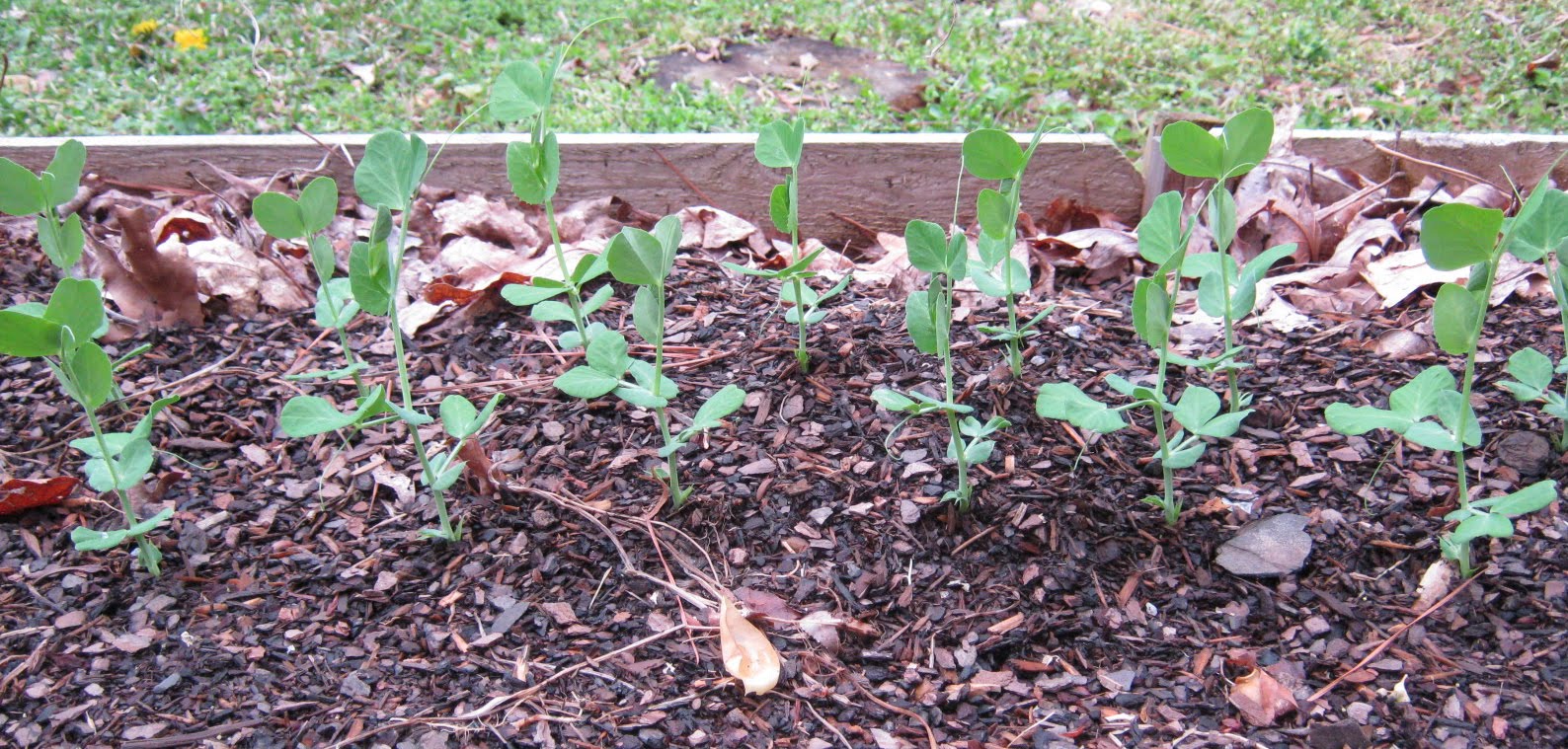
The peas have made a good start:


And so have the potatoes:


On the edge of the garden, the patch of horehound (perennial) is greening up as well as any fuzzy, grayish green plant can, and the grape hyacinth are blooming right alongside.


Elsewhere in the yard, the goldenseal is beginning to bloom. This loves our yard; it has spread to make a nice big patch.


And the toad trillium are beginning to bloom.


Spring is definitely here.

Friday, March 25, 2011

Bumping up the Babies

It is about time to bump my seedlings out of the tray where they were started (in seed-starting medium) and into pots with something that's more like soil. I usually fill the new pots with Miracle Grow potting soil, but a friend of mine who uses the same stuff had a problem this year.

My friend starts about a thousand plants each year. Some are for her own garden, but most are for Master Gardener projects like the Plant-a-Row-for-the-Hungry garden, where we both volunteer, and the veggie garden at the elementary school for which she is the project chair.

This year, she transplanted all her seedlings into the potting soil as usual, but this year all her seedlings died. She called the company, because she is pretty sure there was too much nitrogen and that it burned the plant babies. The company refunded the money for her three bags, but she will have to start all those seedlings again. That is a lot of work and time lost.

The big problem for me is that I bought my bag of potting soil at the same store, and at about the same time. It is probably from the same lot, but my friend doesn't have her empty bags anymore to compare.

Yesterday, because I would hate to lose my (much smaller number of) plant babies, I bought a big bag of Farmer D's Planting Mix. If I had been thinking, I would have switched last year when I first saw it, because it is locally produced and not already laced with fertilizers (I will get to manage the nutrients myself).

This afternoon, I washed the empty six-pack-style plant containers that I plan to use for the first bumping up and filled them with planting mix. The tomatoes are all settled into their new spaces, but the rest of the babies will get moved tomorrow.

Monday, March 21, 2011

Progress of Spring

My seedlings, both indoors and out, are mostly up but also still quite small.

Outdoors, where I set out a lot of seeds on homemade seed tapes right before a big rain, the last seeds to germinate have been the carrots and scallions, but when I got home from work tonight, I could see them coming up. I must have hung over that bed just grinning for about ten minutes.

The most amazing part about that planting is that the seed tapes did such a great job holding the seeds in place. There are a few that have strayed out of their lines, but the plant babies are, essentially, in their assigned spaces in spite of a couple of downpours.

The seeds I've started in a tray are almost far enough along to transplant into individual pots. The first sets of true leaves are becoming well-developed in all the tomatoes and lettuces, and they are becoming big enough to see without a hand-lens on the eggplants, peppers, beets, spinach, chard, and parsley.

The overwintered plants out in the yard are looking good (except, of course, that I pulled up the last 4.5 pounds of carrots last week when they began to grow new leaves).

The amazing patch of cilantro has been great to have all winter long, but it is beginning to bolt. Luckily, I have new cilantro coming up already in a couple of other places in the garden.


Last fall's chard has put on enough growth that we can harvest some for meals.


And elsewhere in the yard, spring is really coming along. All of the flowers pictured here today have been blooming for about a week, so they are almost done. They are all, essentially, ephemeral. Soon the blooms will drop off, any seeds that are going to be set will be set, and the leaves will begin to die back. When the hot weather of summer sets in, there won't be much left above ground to show where these live.

This is the toothwort.


This little rue anemone is among my favorites, but it is pretty obvious that I need to pull some weeds in the patch of ground it inhabits.


The bloodroot is so white it almost glows at the back of the yard. There are two patches across a little path from each other.


Unlike the others above, these bleeding hearts aren't native. They are amazing, though. There have been times when I have just sat near them on the ground and admired the pink.

Thursday, March 17, 2011

Planting with PAR

At the Plant-a-Row-for-the-Hungry (PAR) garden for which I am a volunteer, we continued this week with the early spring planting. Only one other person in the whole group had ever made seed tapes before, so we started our Wednesday session in the Carriage House, making seed tapes out of toilet paper, Elmer's glue, and carrot seeds. We haven't planted carrots before at PAR, so this is a double experiment for us.

Some of these gardeners work with children at other projects, and they were particularly happy to discover how easy making seed tapes is. The hardest part (especially for the people who didn't bring their reading glasses to the garden) was getting the seeds onto the glue without dropping huge numbers of them in a pile all at once.

Fred, our other gardener who has made seed tapes, gets around the "tiny seed" problem by using pelletized seeds. He drops one at a time, with tweezers, at the correct spacing onto his homemade seed tape. I am less precise in placing seeds onto my seed tapes, but I usually have to do a little thinning as a result.


There were enough of us present that it didn't take long before we had a lot of seed tape ready to go.


After we had plenty, we tidied up (put the newspaper back into the recycling bin where we found it) and moved to the garden to work. Planting the seed tapes didn't take long, either, but we had plenty of other tasks to keep us occupied. Broccoli was planted along the edges of the bed in which the carrots are now planted.


We also planted more potatoes and onions. We didn't finish getting these in the ground, because parts of their bed were still too wet from the previous day's rain. We made a lot of progress, though.


We are really fortunate that the city had someone weed-whack our cover crop (the garden is on city property), the Austrian winter peas. The greenery was becoming startlingly thick, and it was going to be heck to turn under, even with a heavy duty rototiller. The potato/onion/carrot/broccoli areas had already been tilled by Doug (thank you!). If we are lucky, he will be able to till the rest of the garden in a couple of weeks, shifting the good organic residue of the peas down into the soil, where we need it.

Friday, March 11, 2011

Making the Most of Small Gardens

Over at the blog called Our Engineered Garden, EG has a post up about setting up his trellises. Growing big, climbing plants up trellises is one way to get more food from a small garden space.

His post made me think a bit about why I don't use more trellises in my own small garden, and what it mostly comes down to is height. I am not at all tall. Growing things up trellises, where I can't reach them to take care of the plants and harvest the produce, just isn't practical for me. For taller people, trellises make a lot more sense. It turns out that EG is well over six feet tall.

My strategies for maximizing production have relied more on using the gaps between plants on the ground. As I plan where in the garden to plant each crop, I consider each plant's eventual height and sprawl. Plants that will spread across the ground, like sweet potato vines, can be planted next to a crop that uses less ground space and more air space, like okra, corn, or peppers. The vines can then be aimed toward the bare ground under the other taller crop, where they act like a mulch over that ground, shading out weeds. This kind of planning lets me have sweet potatoes in a small garden.

When the sprawling crop is one that uses tendrils to climb, like in cucumbers, squashes, and melons, some extra effort is needed to keep these from climbing up the taller plants (and possibly pulling them over), but that doesn't take much time.

Another strategy is using the close, grid-like spacing described in books like Mel Bartholemew's "Square Foot Gardening" and John Jeavon's "How to Grow More Vegetables and Fruits, Nuts, Berries, Grains, and Other Crops Than You Ever Thought Possible On Less Land Than You Can Imagine." I do a lot of this. When bush beans are well-grown and spaced as in this strategy, they are a beautiful sight.

Yet another strategy I use is intercropping, which means pretty much what it looks like it means: crops "in between." One way to intercrop is to plant root crops in spaces between leafy crops. An example would be carrots interplanted with lettuces. When intercropping, the standard planting distances can be reduced in ways that allow the garden to produce a little more food from one patch of soil. The lettuces could be planted at the usual distances (6-8 inches apart) but in the open spaces, carrots could be sown.

When one crop produces mostly above ground and the other mostly below ground, competition for space is greatly reduced.

The two crops should be genetically different enough that disease and pest problems are also reduced. For example, even though chard and beets don't compete for exactly the same space (one produces a big bit of its harvest-able food below-ground, one produces all the food above-ground) they are too similar genetically for intercropping to be a good idea.

Before the recent big rains started, I planted some seeds outside, and I set them out as intercropped rows in the bed nearest the road. The rows alternate leafy veggies (lettuces, mustard, chard) with root veggies (carrots, beets, radishes).

If I am lucky, the seeds are all still there, rather than having been washed away. In another week or so, I will know. I did set them out as homemade seed tapes, which should have helped keep the seeds in place. Amazingly, I have a contingency plan in place! (Some years I am more organized than in other years.) If not all the seeds come up, I can replace some with plants I've started in a seed-tray in the house. Those, mostly, have begun to emerge.

Saturday, March 5, 2011

Hanging Out with the Old Guys

Insanely early on Wednesday morning, I was at the dermatology office to have a thingy removed (a hazard of a life lived largely out-of-doors). The other people waiting outside for the office to open were older guys, who all turned out to be in their early eighties. We spent time visiting while we waited.

One of my new dermatology friends had grown up in north Georgia but had lived on Lacy Street in Marietta for a little more than fifty years. All that time, he'd had a garden in the backyard. He and his wife now live in a smaller townhouse, but he still gardens. He just asks people he knows, who have sunny spaces in their yards, if he can grow a few (fill in the blank) at their homes. So far, he hasn't been turned down.

He told about a friend who had moved here from Louisiana (this was one of those "way back when" stories), who had always gardened in the black dirt there but who was skeptical about the ability of the red dirt here to support crops. My new dermatology friend went over to his yard one spring, dug out three spaces, mixed in rotted leaves, a little lime and fertilizer, and planted three tomato plants. By the end of the summer, his friend was totally surprised at how well this worked out in terms of total harvest -- "he'd never got so many tomatoes before in his life!"

This year, my dermatology friend and a grand-son-in-law, a young man who has never gardened before, are going to start a veggie garden in the young man's backyard. It sounded as though they are both really looking forward to working together on the project. The older man plans to set up raised beds using old railroad ties to contain the amended soil, because that's what he's always done. He likes for his beds to be three feet wide.

As the conversation continued, he offered some advice. He said that he waits until the end of April to plant his summer garden, claiming that plants set out earlier are slowed down by the cold soil. He thinks his late-planted garden does better than if he had planted on the last frost date, when many people plant. As another gardener who waits an extra week or so, this was very satisfying confirmation of what I've thought/experienced about planting on that last-frost date!

Later in the morning, I was at the Plant-a-Row-for-the-Hungry garden, where we planted onions and potatoes. We are going to plant more next week, when we also plan to make seed-tapes for carrots and plant those, and probably also put in some broccoli transplants. One of our gardeners, Lee, has been growing a lot of her food for a very Long Time, and she said something that I tend to forget, but that's important.

The conversation was about which pole beans to grow. We had looked for mountain half-runner beans at Ladd's Farm Supply, but they weren't in yet when we went. Lee also grows mountain half-runners, but only from the company she called Morse (now it's Ferry Morse). She's grown the same variety from other companies, but she has found that they just aren't as good.

After years and years of seed production by one grower, a variety can develop slight genetic differences that affect its growing and food qualities. Lee thinks the beans from Morse both taste and perform better. Another gardener in another place might prefer beans from a different source, but when ordering/buying seeds, keeping track of where a favorite comes from can really help the success of a garden.

Update on my own planting: onions, potatoes, and peas are in the ground. The potatoes are Red Pontiac; the peas are both Wando (a dwarf English-type pea) and Sugar Snap (an edible-pod pea).

I've also finally started seeds indoors: Tomatoes (Rutgers, Wuhib, Cherokee Purple, Olivette Jaune), peppers (Jimmy Nardello, Czeck black, Ancho, Feherezon, Spanish Spice, Golden Greek, Sweet Chocolate), eggplants (Casper White, Black King), curly parsley, spinach (Bloomsdale), chard (Perpetual Spinach), Collards (Georgia), lettuces (Marvel of Four Seasons, Capitan, Bronze Arrow), chicory (Pan di Zucchero), and some Golden Beets. Some of these are "old reliables" and some are new this year.

Based on the number of varieties, it seems like there wouldn't be enough room in my little garden for everything, but I tend to plant just a few of each kind. This is a way to hedge my bets in the gambling world of gardening. If one crop doesn't pay off, another one surely will.

Sunday, February 27, 2011

UGA and Sources of Gardening Information

When looking for reliable sources of information about gardening, one place to start is at the land grant college in your state. Here in Georgia, that's UGA. It offers a search function on its publications website that can be used to find all sorts of great information.

Publications span a wide range of topics and include a booklet-length text on Growing Vegetables Organically. We handed these out at yesterday's talk on raised bed gardening, but we didn't have enough for everyone. (To get an electronic copy from the linked page, choose which version you want, either html or pdf, and it will appear!) UGA offers publications on individual veggies and fruits, on composting and many other relevant topics.

The good news is that most County Extension offices will send, through the mail, paper copies of their publications if a citizen in the county requests the information. Later in the week, when I get to the Cobb County Extension office, I will be putting together a couple of envelopes full of information for people who came to the talk but missed out on the handouts.

Other sources of information include experienced gardeners, some of whom will have published information in magazines and newspapers. Yesterday, someone asked about growing vegetables in the shade. Amazingly enough, when I opened my email this morning, the most recent note from Mother Earth News included an article on growing veggies in shade.

The article, Best Vegetables to Grow in the Shade, includes a link to a handy table of veggies and their minimum sunlight requirements along with the general discussion on maximizing availability of sunlight to a shaded garden.

Saturday, February 26, 2011

This Morning's Talk

This morning's talk on raised bed gardening was a lot of fun. It is great to be in a room full of people who are all interested in gardening!

One thing we didn't get to, though, was listing specific varieties of veggies that do well here. I promised to put together a such a list for my own yard. For anyone interested in a more detailed list of tomato varieties I've tried, there is a post from last April with that information.

The list is not complete, but it is a start. I hope it is helpful!

Plants that do well in Amy’s yard:

Okra—any okra will do well (okra loves the summer heat and has few pest/disease problems). I grow Cajun Jewel because it is a dwarf variety. Plant okra seeds directly in the garden.

Lettuces—Red Sails, Tom Thumb, Marvel of Four Seasons, assorted Oak Leaf varieties, Capitan, and more have all done just fine in cool spring and fall weather. I have been growing Slobolt (less tender and tasty than most lettuces) as a later planting because it lasts longer into the warm weather. All of these are grown to pretty much full size. Susan, who gave the second part of the presentation, plants a salad mix every few weeks through the entire growing season to use as baby greens (cutting them as they get to about three inches tall). Lettuces get bitter as they mature in warmer weather; the “baby greens” strategy means she gets gourmet salad ingredients all summer long.

Peppers—bell peppers suffer from the good years/bad years syndrome. Some years they do really well and some years they don’t. As far as I can tell, all bell pepper varieties have the same problem. I still grow some bell-type peppers each year (one or two plants, usually California), just in case we have a good year. Banana peppers are very productive every year, as are jalepenos, Jimmy Nardello peppers, and ancho/poblano peppers. One I grew for the first time last year, Feherezon, did well, but I won’t know for sure that it is a reliable variety for a couple more years. I’ve grown a hybrid called Spanish Spice that has been productive and good for grilling, stuffed with that Mexican crumbling cheese.

Radishes—all radishes I’ve tried work well now (French Breakfast is my favorite), but they didn’t when I first started gardening here. It took a lot of work on the soil to get it in good enough shape. I also grow winter radishes (Muncheiner Beer is one) in the fall.

Spinach—Bloomsdale, Space, Tyee all have worked.

Cucumbers—Staight Eight, Straight Nine, Marketmore, Burpee’s Picklebush. A friend grows Lemon Cucumbers and loves them.

Broccoli—Packman is one I’ve grown, but we’ve tried others at the Plant-a-Row-for-the-Hungry garden (whatever varieties were being offered as plants at HomeDepot/Lowes/Pikes/Walmart) and they all did about the same. If growing from seed, I would choose one with a relatively short time-to-maturity (the weather goes from cool to HOT pretty fast some years).

Collards—any will do well. I usually grow one called Georgia.

Melons—this is something I’ve been working on. A whole lot of melons have been a big disappointment. Two that have been successful are Schoon’s Hardshell (cantaloupe type) and Sugar Nut (canary melon). Right now, seeds for Sugar Nut, a hybrid, are hard to find. I am in the middle of a project to de-hybridize it. When I get the line stabilized, there will be plenty of seed locally for lots of gardens.

Eggplants—any should do well. I like Casper White.

Peas—I grow dwarf types. I’ve tried a few, but so far Wando is the one that does best for me. A taller pea that is eaten in the shell, Sugar Snap, also does well. It also gives more food per foot of trellis than English peas that are eaten shelled out.

Bush Beans—my family likes Burpee Tenderpod, but it isn’t available every year. At the Plant-a-Row-for-the-Hungry garden we grow Blue Lake, and it is very productive for us. This year, I am trying Provider. I’ll be posting on my blog how it works out for me.

Beets—Detroit Dark Red

Carrots—I’m still having trouble with this crop. So far, Scarlet Nantes is at the head of the list.

Tomatoes—Rutgers (determinate), Arkansas Traveler, Better Boy, Park’s Whopper (bred for the South) have all done well for me as main-crop tomatoes. Some years, Radiator Charlie’s Mortgage Lifter has done well, but it died in my yard for the first time a couple of years back. It had been a very wet spring. I’ve also had pretty good luck with Costoluto Genovese. For paste tomatoes, Roma and Wuhib both have been good producers. Of the two, Wuhib is my favorite. For cherry tomatoes, Sweet 100 and its variations (are they up to Sweet Million yet?) have been good. Twice now, I’ve grown a yellow pear-shaped cherry type (is that an oxymoron?) called Olivette Jaune that has been outstanding. For a “keeping” tomato (to plant at the end of June), Burpee’s Winter Red Hybrid is my favorite so far.

Swiss Chard—I grow one called Perpetual Spinach. It is more “spinach-like” than most chards. However, if you can’t find it, growing any of the others and harvesting while the leaves are still fairly small is another way to get chard leaves tender enough to eat as salad.

Squash—I usually grow Raven zucchini as my summer squash. At the Plant-a-Row-for-the-Hungry garden we grow straight-neck yellow squash. These both, as with all summer squashes, usually die from attacks by the squash vine borers in mid-summer. For winter squash, Seminole pumpkin squash is good, but it sprawls alarmingly. For a tidier winter squash, a bush butternut (which is resistant to the squash vine borers) is a good choice.

Sweet potatoes—for gardeners who don’t mind the sprawl, any will do well in Georgia. I grow Beauregard and Porto Rican. I hope to add a new variety this year.

When choosing seeds for each year’s garden, I make sure that I have enough “old reliables” to get through the season with good-enough production, but I also add some experimental varieties. Last year I grew ground cherries (another tomato-family plant, so they were in a container). They did just fine. Most years, I grow chicory of one sort or another for greens, but this year’s variety (Pan di Zucchero) is one that should head-up rather than forming a dandelion-like cluster of leaves. I have ordered a couple of new peppers and a new eggplant, too.

Thursday, February 24, 2011

It's Time!


The trout lilies are blooming! That is my cue to plant peas. It is too late this evening, of course, but I have hopes for tomorrow. Of course, on NOAA's website, the map of Georgia has a big red patch over the northern half of the state with the words "Isolated severe thunderstorms possible. Damaging winds. Large hail." I am hoping that "scattered" means my yard has a good chance of not being soggy in the morning.

It's time to begin the indoor seed-starting, too. My seed orders haven't arrived, but I plan to set up a tray with some of the seeds I already have. The cooler-weather veggies will get started first, along with peppers and eggplants. Those two summer veggies seem to need a long head-start.

The cooler weather veggies that will get started include spinach, the lettuces that are less heat tolerant, mustard greens, maybe some more chard (it's hard to have too much), beets, and carrots. Some herbs will get started, too. Maybe some of the older seed packets will finally be empty. When the new seeds get here, if some of the older packets aren't removed, there won't be enough room in my storage boxes for the new ones!

With the talk on raised bed gardens on Saturday morning and the seed starting in my own yard, I have a great garden weekend to look forward to.

Monday, February 21, 2011

Talking and Doing

This is a week for both of the activities in the title of the post. This coming Saturday, the leader of the Plant-a-Row-for-the-Hungry (PAR) Garden and I will be giving a talk on raised bed gardening. The talk will be at the Smith Gilbert Garden in Kennesaw, which is also the home to our PAR garden.

A couple of weeks ago we worked out a list of subtopics and divided those up for the presentation. I still need to make a handout for my part, so people who show up will have a handy little sheet to follow along and to take home as a reminder, in case I say something that is helpful to them.

Before then, some of the PAR gardeners will be making the Third Annual Pilgrimage to Ladd's Farm Supply up in Euharlee, for seed potatoes, onion sets and assorted seeds. Previous trips to the store have been both fun and educational, and I am looking forward to this one.

Over this last weekend, though, we had such beautiful weather that I spent as much time outside as I could. The hoe and I did a number on the winter weeds, and I dug in some compost to begin getting this year's potato patch ready.

I also jumped the gun a little bit on the onions: mine got planted. My big excuse for putting them in the ground so early is that the forecast is for still more warm weather ahead. I am hoping that the stretch of warm weather will help the little onions get settled in before the cold returns.

The trout lilies still aren't blooming, so the peas are still in their packet instead of in the ground. Maybe next weekend . . .

Friday, February 18, 2011

When to Begin . . .

Several years ago I spent some serious time working out a veggie-garden planting calendar for my yard. I have since discovered that the Old Farmers Almanac website has a feature that will create a planting schedule using US frost dates for gardens all over the US. A gardener just has to specify a location, and a schedule will appear!

The schedule includes dates for gardeners who also like to consider phases of the moon in their planting. I have checked the Old Farmers Almanac schedule for Kennesaw, and it is not too far off from the one I created for myself for most crops.

It shows later planting dates for potatoes (old-timers around here get their potatoes into the ground in March), and it has a very small window-of-opportunity for planting radishes. Some years I start sooner and others I end later. It also is only for the spring/early summer garden. However, a new gardener could do worse than to consider the planting dates suggested in the schedule.

Wednesday, February 16, 2011

PAR Planning

The group that volunteers at the Plant-a-Row-for-the-Hungry (PAR) garden met today to talk about where to plant which crops in the garden this year. It was great to see everybody, both the old friends and some new friends, too. We had fun, but we also worked. There is a lot to think about in planning the garden!

The needs of the food pantry where we donate the harvested food have a huge effect on our choices of what to grow. One consideration is that the garden needs to produce a lot of good food, since the pantry works hard to feed a whole lot of people. The pantry also can't take any kind of greens because it isn't equipped (refrigerator-wise) to keep greens fresh and un-wilted. The food we grow for donation needs to "keep" pretty well without much pampering.

Once the choices are worked out, there is the step of figuring out where in the garden each crop should be planted. The garden had its first year at the current location in 2006. This means that the crop rotation is beginning to be a bit tricky.

We didn't make any final decisions (our fearless leader has that honor!), but we had copies of drawn layouts from the past several years to look at (so we would know the history of each patch of the garden) and we had blank maps to doodle on.

This drawing shows some of our thoughts:


The yellow writing represents one possible layout and the pink another. We discussed going back to the 2006 layout for this year, but we aren't growing exactly the same crops at this point. For example, back in 2006 we grew corn, but the resulting harvest didn't provide enough food to justify its inclusion in the garden. We also have more trellised area now (but still not enough!), which means the spaces are going to work out a little differently.

Part of the group discussion was about crop rotation: trying to keep plants from any one family from being planted in the same spot within three (or more) years. This is one goal that we just aren't going to be able to meet every year. Some years, the tomato/pepper/potato/eggplant group is going to be planted in a patch too soon, and so is the cucumber/squash/melon group. It's a good thing that we aren't too hung up on perfection!

Another part of the discussion centered around the desire to try some different crops, and maybe some different varieties (to "trial" them without risking a whole harvest). We may save one of the wedges to use as an experimental plot. One of the crops for that might be carrots. I promise this wasn't my idea, even though I have been dissatisfied with my current carrots. We may get together in a couple of weeks to make seed tapes for carrots, and possibly for some other crops (radishes? beets?). The suggestions for things to try were flying!

We briefly discussed the idea of succession planting, but a fuller discussion for that will have to wait for later. The main ideas were that some kind of Southern peas will probably follow the potatoes & onions, and that we might want to have two separate plantings for the tomatoes. I do at my house, and so does Fred (long-time gardener who moved here from Alabama). The later crop sometimes is what makes the tomato-year a success.

In a week or two we will make our pilgrimage to the farm supply store up in Euharlee for seed potatoes, onion sets, and seeds. I already ordered enough Schoon's Hardshell melon seed for the PAR garden, and our fearless leader has stored leftover seeds from last year. Soon, it will be time to turn under the cover crop of Austrian winter peas and to get busy in the garden. Looking forward to it!